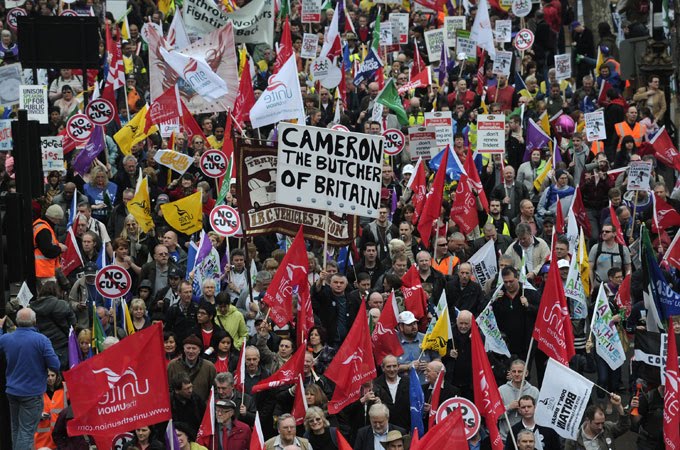
After his visit to the Kingdom in May, Donald Trump decided to back the Saudi-led blockade of tiny Qatar (2015 population 2.235 million, but just 313,000 citizens) imposed less than a month later.
The
siege was also joined by Bahrain, Doha, the Maldives, the UAE – Abu
Dhabi, Ajman, Dubai, Fujairah, Ras al-Khaimah, Sharjah and Umm
al-Quwain. It was quickly pointed out that:
“(The) US President has long history of lucrative investment deals with Saudi Arabia but few ties to the small Gulf nation.” (1)
Trump’s
financial bounties from Saudi: “… includes the purchase of tens of
millions of dollars in Trump’s real estate properties by wealthy Saudis
over the years.”
Moreover:

Prince Alwaleed bin Talal (Source: Kingdom Holding Company)
“In 1995, when Trump was struggling to make payments on one of his most important New York properties, the landmark Plaza Hotel, it was (Saudi) Prince Alwaleed bin Talal, who came to his rescue … In 1991, bin Talal also bought a huge (282-foot) yacht, the Trump Princess, from creditors at a time when Trump’s other big venture, the Atlantic City casinos, were under pressure.”
In
fact it was far more than mere “pressure.” In July 1991 the Trump
corporation owned Taj-Mahal casino, the world’s largest, filed for
bankruptcy. (2)
So,
seemingly keen to back up benefactors and apparently unknowing and
uncaring of even major regional complexities, it is unlikely Donald
Trump had camels on his mind.
Ironically
the stated reason for the potentially crippling embargo – Qatar imports
almost everything – is the accusation of support for extremism, an
allegation which has been leveled, with documentation, at both Saudi and
the US in orders of magnitude. Another demand is that Qatar ends an
independent minded foreign policy. As Newsweek puts it (22nd June 2017):
“What Saudi and its allies are trying to do is increase the costs on Qatar for its actions, hoping that it will realign its policy with those of the GCC.“The conflict between Qatar and its neighbours dates back to the Qatari desire for political relevance in the late 90s and early 2000s. It engaged with Israel, Hezbollah, and Iran, when its neighbors could not, and carved out a niche for itself as an arbiter and link between international powers and … groups that no one else wanted or had the capacity to deal with.“Even the United States saw value in this role, asking the Qataris to liaise with the Taliban during the U.S. invasion of Afghanistan.”
Now the US, back stabber in chief, has stabbed again.
In
wars, embargoes and disputes affecting borders, animals too are often
victims, if ignored and forgotten ones. Also forgotten are Trump’s
repeated campaign commitments that the US would no longer murderously
meddle in policies in far away places. Indeed, the Brookings Institute
went as far as to call him an “isolationist”, a position they hold, he
had adhered to since, nearly thirty years ago, when he spent $95,000 on a
full page advertisement in the New York Times expounding on those
views. (Brookings.edu, 24th March, 2016.)
How quickly he changed “beliefs” of decades and avowed commitments. For example a recent headline (3) read:
“It Took Obama More Than Two Years to Kill This Many Civilians. It Took Trump Less Than Six Months.”
The sub-heading was:
“Civilian deaths in Iraq and Syria from coalition strikes were roughly eighty per month during the Obama White House, compared to roughly three hundred and sixty per month during Trump’s administration.”
With
such disregard for human life, camels, if they have ever even
registered as existing in his seemingly gnat like attention span, don’t
stand a chance.
An emaciated camel receives some of the emergency supplies delivered by Doha (Source: The New Arab)
With
the imposition of the embargo the Saudi government expelled the Qatari
owners of more than fifteen thousand camels and ten thousand sheep, with
nine thousand camels reportedly expelled in just thirty-six hours.
Qatar,
just 4,414 sq. miles, had arrangements to use the vast spaces of
neighbouring Saudi (830,000 sq. miles) for grazing, explained the Daily
Mail (4) further: ‘Camel owner, Hussein Al-Marri, from Abu Samra, said:
“I have returned from Saudi Arabia. I myself saw more than 100 dead camels on the road as well as hundreds of lost camels and sheep.”
Another farmer recounted:
“I lost fifty heads of sheep and five camels and there are ten missing. I do not know anything about them.”
Video
footage shows animals: “herded into huge pens after restricted border
opening hours meant only a few hundred could cross each day, and many
died of thirst or untreated injuries.
“Heartbreaking
footage showed animals succumbing to the harsh conditions, including
one female camel which died while giving birth.”
This camel was part-way through giving birth when she succumbed to the harsh conditions (Source: The New Arab)
Local reports recount: “as many as one hundred baby camels died during the arduous journey back to Qatar.”
Another
camel owner described these great, graceful, “ships of the desert” as
exhausted and confused, not knowing which way to go in temperatures of
50 degrees C – 122F.
Farmers
recounted that without the intervention of the Qatari government the
plight of the animals could have been worse. The Environment Ministry
provided emergency shelter on the Qatari side of the border with water
tanks and food for more than eight thousand camels. Veterinarians and
animal experts were also provided.
The
speed of the expulsion left farmers with huge logistical problems, with
camels lost, their owners not knowing whether they were dead or alive.
Camel owner Ali Magareh spoke for many:
“We just want to live out our days, to go to Saudi Arabia and take care of our camels and go back and take care of our family … We don’t want to be involved in these political things.”
A spokesperson for international animal charity SPANA told the paper:
“All too often around the world, working animals and livestock become the forgotten victims of conflict and political disputes.“’It’s also important to remember that the communities that depend on working animals worldwide are usually the poorest in society – these animals are often all they have and are absolutely crucial to their livelihoods.”
50,000 Qatari camels remain in Saudi Arabia. The outcome of their fate remains unknown.
There
is a poignant irony at this treatment of the camels by Saudi Arabia,
custodian of the two holiest sites in Islam, Mecca and Medina. When the Prophet Muhammad
left Mecca for Medina he allowed his camel to roam, deciding that where
she stopped to rest would determine where he would make his home.
He is buried in the city’s great al-Masjid an-Nabawi (“the Prophet’s Mosque.”)
In
the Qur’an the 17th verse of the Chapter Al-Gashiyah asks: “Do they not
look at the Camels, how they are made?” It is explained that as the
wonder of all creatures, the camel is created with many characteristics
and then placed on earth as a sign of the uniqueness of the Creator and
Creation. The camel gifted with superior physical features, to survive
the harshest of climates and conditions, has been given to the service
of mankind.
Mankind, however, has the responsibility to recognize, respect, all miracles of creation throughout the universe.
It
has to be wondered if the custodians of the holy cities, ruling from
Riyadh are as forgetful of the inherited holy tenets as those in
Washington are unknowing and uncaring.
Global
Research’s Professor Michel Chossudovsky has just returned from Qatar,
where he recorded camels in the barren, vegetation-less desert a short
distance from the Saudi border. He comments with bitter irony:
“The Saudis expulsed them [camels whic belonged to Qataris] on the pretext that, even those born in Saudi Arabia, did not have the right of abode, they are non-residents in the KSA (Kingdom of Saudia Arabia.)“They are stateless and the camels are now applying to the UN for the relevant documents which will enable them to stroll through the Qatari desert where there is absolutely nothing to eat, since they are not allowed to go back to the KSA.”
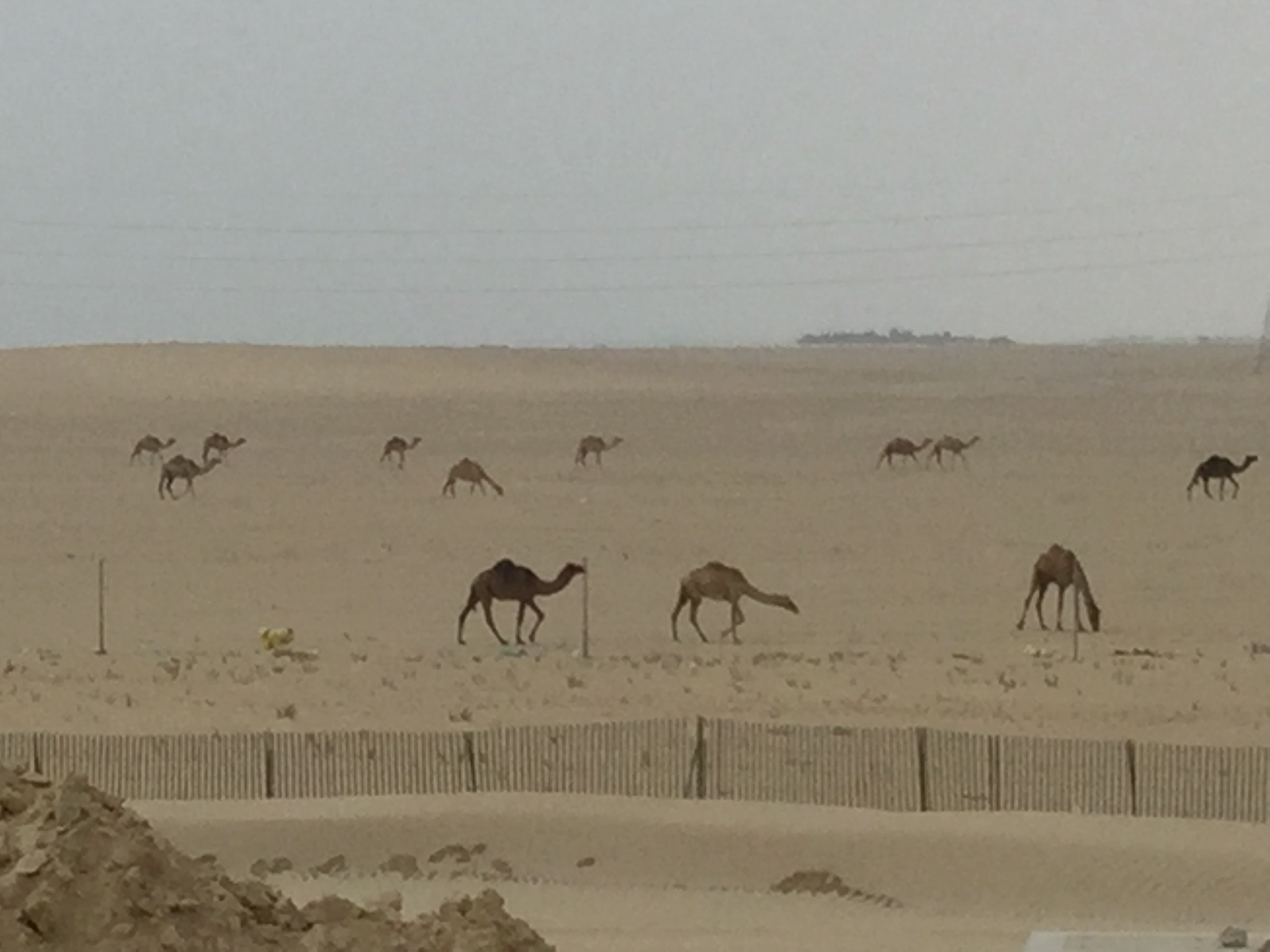
Source: Global Research, Michel Chossudovsky, Camels in the desert near the Saudi border, Qatar, July 15, 2017
So far, Washington has not demanded a wall be built.
Notes
Featured image from NDTV
The original source of this article is Global Research
Copyright © Felicity Arbuthnot, Global Research, 2017