Rather than serving public interests, the business press have sought to divert attention from the critical subjects.
By Shane QuinnGlobal Research, July 24, 2018
Url of this article:
https://www.globalresearch.ca/
 As
the summer moves on, the world is literally burning under intense heat
due to ever worsening climate change, mainly as a result of government
impotence under corporate sway. Areas near Tokyo have just experienced a
record temperature of 106 degrees Fahrenheit (41.1 Celsius), with
beleaguered residents fleeing to avoid the sun. Across Japan, this
unprecedented heat wave has already killed dozens of people.
As
the summer moves on, the world is literally burning under intense heat
due to ever worsening climate change, mainly as a result of government
impotence under corporate sway. Areas near Tokyo have just experienced a
record temperature of 106 degrees Fahrenheit (41.1 Celsius), with
beleaguered residents fleeing to avoid the sun. Across Japan, this
unprecedented heat wave has already killed dozens of people.
Nor
are the searing temperatures being restricted to southerly climes. In
northern Siberia, temperatures of over 91 degrees Fahrenheit (33
Celsius) were recorded on 5 July. The heat wave in sections of Siberia’s
far north, more than double the normal temperatures expected, has
astonished meteorologists. It also raises dire concerns that billions of
tons of carbon dioxide and methane, for centuries locked in frozen
permafrost, will be released into the atmosphere and thereby further
accelerate climate change. This is a major concern for scientists who
note with growing alarm the unchecked temperatures even within the
Arctic circle.
In
other northerly landmasses – Canada for example – scores of people are
estimated to have died this month, with the huge province of Quebec
experiencing particularly severe heat. Montreal, the most populous
municipality in Quebec, endured record breaking temperatures early this
month of almost 98 degrees Fahrenheit (36.6 Celsius).
Scandinavia
is also undergoing blinding heat, with parts of Sweden, Norway and
Finland recording temperatures almost twice the average; slightly above
or below 90 degrees Fahrenheit, breaking previous records. Last week, in
the urban area of Bardufoss in Norway’s far north, a record was
compiled of 92.3 degrees Fahrenheit (33.5 Celsius). For weeks Sweden has
been been battling dozens of forest fires, which have destroyed about
two million square meters of woodland – with almost $70 million worth of
damage inflicted.
While
these temperatures have been broadly reported over the previous weeks,
the root causes are almost invariably overlooked or downplayed. Since
records began in the mid-19th century, 17 of the hottest 18 years have
occurred since 2000. Unless government policies drastically alter, this
trend will continue as the years advance.
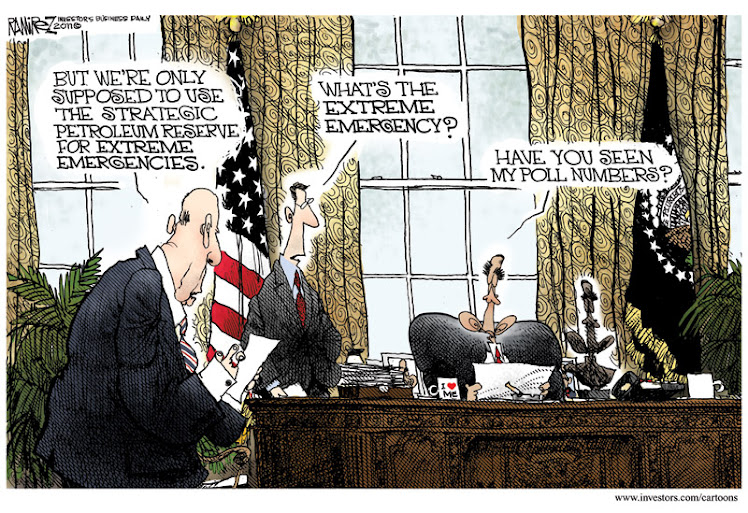
Oil
price decreases in recent times have been widely heralded by the
corporate press in the West. It represents another surreal moment in
human history. In reality, the media has been lauding the impending
destruction of the planet along with that of their children and
grandchildren’s futures. Jubilant headlines regarding falling oil prices
have long been declaring under such lines that,
“It gives consumers more money and cuts manufacturing costs”, when instead they should read, “Let’s accelerate the destruction of the human species and incinerate the earth”.
The
price of oil in the US market is too low, and should instead be placed
at a higher cost as it is in Europe. The higher price discourages the
continuing use of fossil fuels, which is wiping out the environment, and
a driving factor behind planet-altering climate change. Should the
dependence on non-renewable resources like oil continue, it will prove
another significant blow to the globe.
With not a reference of the threat to the earth, economic policy analyst Stephen Moore, a regular contributor to the Wall Street Journal and other publications, wrote in late 2016 that,
“The greatest stimulus to the US economy in the past two years has been the steep decline in oil prices… Think about the boon to American consumers… The blessings of low oil prices are doubly felt in the US because we still import hundreds of billions of oil a year. The big losers from low energy prices are Iran, Saudi Arabia, Russia, ISIS and OPEC. Couldn’t happen to a nicer group of people”.
Unmentioned
by Moore is that Saudi Arabia has been a major US ally for the past 75
years, continuing with enormous support under president Donald Trump.
Indeed Moore himself, a Republican Party member, acted as a key
economic adviser to Trump’s presidential campaign. Perhaps it is little
wonder that Trump subsequently pulled his country out of the Paris
Climate Agreement, another blow to the planet.
With regard coal, a lethal and increasingly defunct fossil fuel, Trump has said in the preceding months,
“We have ended the war on American energy – and we have ended the war on beautiful, clean coal”.
On a separate occasion Trump said that,
“Hillary Clinton wants to put all the miners out of business. There is a thing called clean coal. Coal will last for 1,000 years in this country”.
Should
current policies persist, there may not be a United States as we know
it in 100 years, let alone a thousand years. After all, burning of coal
is the largest contributor to human-engineered carbon dioxide entering
the atmosphere; humans’ use of coal has long been a key factor in the
ongoing warming of the planet.
It
is a strange spectacle witnessing policies being continued that are
pushing the human race closer to the cliff’s edge. In Bangladesh, a
small country in southern Asia, scientists forecast that up to 25
million of its people will be forced to flee within the next generation.
This is due to rising sea levels as a result of melting ice sheets and
glaciers, along with other severe weather events. Migrant crises in
which tens of millions are expected to depart will be far more serious
than the exodus of recent years, which was primarily as a result of
people fleeing wars waged or supported by Western governments.
Bangladesh’s chief climatologist Atiq Rahman believes that,
“These migrants should have the right to move to countries from which all these greenhouse gases are coming. Millions should be able to go to the United States”.
Indeed,
over nine million Bangladeshis have already left their homeland,
departing because of worsening climate change allied to the country’s
dismal poverty.
Across
the world temperatures are already becoming increasingly intolerable,
mostly affecting the poor. In Iraq, the thermometer is this week set to
read 120 degrees Fahrenheit (49 Celsius), having previously reached a
staggering 129 degrees Fahrenheit (54 Celsius) in the Iraqi city of
Basra in 2016. With temperatures to continue breaking records as the
years go by, states like Iraq who have suffered so much will become
desolate, uninhabitable places.
As
the Himalayan glaciers melt, clean water for many in southern Asia is
becoming a rarer commodity. This is already a major issue in India, a
nuclear weapon state, with tens of millions of the country’s inhabitants
having no access to clean drinking water.
Elsewhere,
even small and seemingly insignificant countries like Ireland are now
bearing a serious global responsibility. Ireland – a rich nation dogged
by inequality – has long held company with the worst climate culprits in
Europe, and in 2018 has the second worst climate change record among EU
states (Poland is last). It is a remarkable fact that Ireland, with a
population well under 10 million, produces more carbon emissions than
over 5% of the global human population.
John Sweeney, Ireland’s leading climate scientist, writes that
“when it comes to getting our own greenhouse gas emissions in order, it is among the worst laggards in the developed world. We emit more greenhouse gases than the poorest 400 million people on the planet. Almost unique in the EU, Ireland is failing to meet its obligations and is increasing its greenhouse gas emissions”.
Such is the price that countries pay for surrendering to corporate power, as compromised governments act with ongoing impotence.
The
general populations of the rich states mostly responsible for unbridled
climate change are largely unaware of how serious the problem is. Much
of this is due to the gross underreporting of this earth-defining issue.
The business-run media, acting under the Orwellian title of “the Free
Press”, are irrevocably chained to powerful vested interest groups, as
are their governments above them.
The
corporate grip upon media would undoubtedly start slipping were serious
reporting of climate change (and nuclear weapons) to be undertaken.
Instead, as the world burns, the press is largely focused on such issues
as “Russian meddling in the US election” – a subject which must have
people collapsing in laughter and bewilderment in Latin America, Asia
and so on, regions all too familiar with what American interference in
domestic affairs truly entails.
In
Europe, the unending Brexit negotiations have been regular front page
news for about two years. Meanwhile, the far more important topic of
climate change either goes unreported, or relegated deep into the inside
pages. As a result of their inaction, the mainstream media are
contributing to the growing threats facing the earth.
In
the US, over half of Americans do not believe “global warming will pose
a threat in their lifetime”, according to a Gallup poll from March this
year. Yet the reality is that climate change is already posing a
serious threat to the American mainland, as seen by the increasingly
destructive droughts in California and Nevada – and elsewhere by massive
hurricanes battering America in recent years, like Harvey, Sandy and
Katrina, inflicting tens of billions of dollars worth of damage.
*
Shane Quinn obtained
an honors journalism degree. He is interested in writing primarily on
foreign affairs, having been inspired by authors like Noam
Chomsky. He is a frequent contributor to Global Research.