Author’s Note
While President Trump has announced a trade war directed against China, he also ordered hikes in tariffs directed against Canada, Mexico, the European Union and South Korea not to mention the economic sanctions regime imposed on Russia, Iran, North Korea, Cuba and Venezuela. This broader trade war directed against the EU and America’s NAFTA partners has far-reaching implications. Similarly, President Trump fails to understand that these trade restrictions –including those directed against China– are largely detrimental to the U.S. economy.
With regard to China, Trump has duly instructed his administration to impose tariffs on about $50 billion worth of Chinese imports.
His stated objective is to reduce the trade deficit with China.
What Trump does not realize is that the trade deficit with China contributes to sustaining America’s retail economy, it also contributes to the growth of America’s GDP.
Trade sanctions directed against China would immediately backlash against America.
In late September, China’s foreign Minister Wang Yi warned Washington that the PRC “will not be blackmailed”:
“Protectionism will only hurt oneself, and unilateral moves will bring damage to all,” he said in a statement at the UN General Assembly gathering of world leaders.
“President Donald Trump this week cranked up punitive tariffs on China, and Beijing responded in kind, escalating a trade war between the world’s two largest economies.What US foreign policymakers do not understand is that China is not dependent on US imports. Quite the opposite. America is an import led economy with a weak industrial and manufacturing base, heavily dependent on imports from China.
Trump upped the ante by then accusing China of meddling in the upcoming US midterm elections because it opposes his trade policies.” (The Guardian, September 28, 2018)
Imagine what would happen if China following Washington’s threats decided from one day to the next to significantly curtail its “Made in China” commodity exports to the USA.
It would be absolutely devastating, disrupting the consumer economy, an economic and financial chaos.
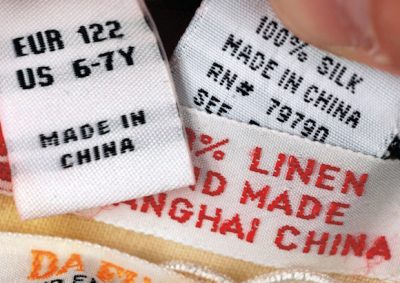
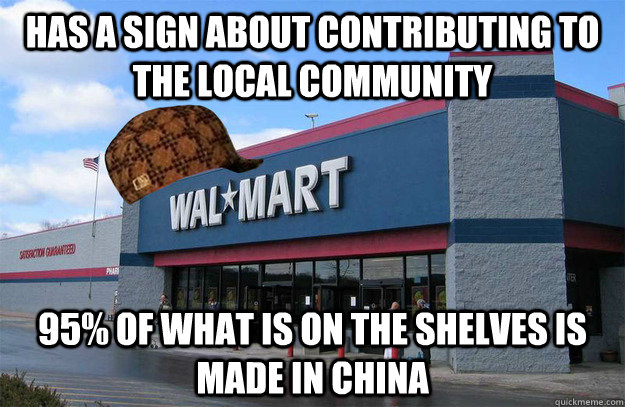
“Made in China” is the backbone of retail trade in the USA which indelibly sustains household consumption in virtually all major commodity categories from clothing, footwear, hardware, electronics, toys, jewellery, household fixtures, food, TV sets, mobile phones, etc.
Importing from China is a lucrative multi-trillion dollar operation. It is the source of tremendous profit and wealth in the US, because consumer commodities imported from China’s low wage economy are often sold at the retail level more than ten times their factory price.
Production does not take place in the USA. The producers have given up production. The US trade deficit with China is instrumental in fuelling the profit driven consumer economy which relies on Made in China consumer goods.
A dozen designer shirts produced in China
will sell at a factory price FOB at $36 a dozen ($3 dollars a shirt).
Once they reach the shopping malls, each shirt will be sold at $30 or
more, approximately ten times its factory price. Vast revenues accrue to
wholesale and retail distributors. The US based “non-producers” reap
the benefits of China’s low cost commodity production. (Michel
Chossudovsky, The Globalization of Poverty and the New World Order,
Global Research, 2003).
Trump’s recent threats against China follow those formulated in 2017
in relation to China’s trade with North Korea, which are analysed in the
first part of this article.Chinese policy makers are fully aware that the US economy is heavily dependent on “Made in China”.
And with an internal market of more than 1.4 billion people, coupled with a global export market, these veiled threats by President Trump will not be taken seriously in Beijing.
Michel Chossudovsky, September 29, 2018
***
In June of last year, Washington threatened Beijing with a
sanctions regime, in response to China’s increased bilateral commodity
trade with North Korea. In recent developments, this has developed into
an all out trade war between Chiana and America. Initially, the US sanctions were not intended to be against the Chinese government: selected Chinese banks and trading companies involved in the financing of China-DPRK commodity trade would be potential targets of US reprisals.
Having lost patience with China, the Trump administration is studying new steps to starve North Korea of cash for its nuclear program, including an option that would infuriate Beijing: sanctions on Chinese companies that help keep the North’s economy afloat.According to Chinese sources, China’s trade with the DPRK increased by 37.4 percent in the first quarter of 2017, in relation to the same period in 2016. China’s exports increased by 54.5 percent, with imports from the DPRK experiencing an 18.4 percent increase.
The insinuation was crystal clear: curtail your trade with North Korea, or else…
 Coupled
with the aggressive legislative sanctions “package” recently adopted by
the US Congress directed against Russia, Iran and North Korea,
Washington now threatens China in no uncertain terms.
Coupled
with the aggressive legislative sanctions “package” recently adopted by
the US Congress directed against Russia, Iran and North Korea,
Washington now threatens China in no uncertain terms.Trump is demanding that Beijing relinquish its relationship with the DPRK, by unconditionally siding with Washington against Pyongyang. Washington has granted China six months “to prove that it is committed to preventing a nuclear-armed North Korea”, despite the fact that Beijing has expressed its firm opposition to the DPRK’s nuclear weapons program.
The political deadline is coupled with veiled threats that “if you do not comply”, punitive trade measures will be adopted which could result in the disruption of China’s exports to the United States.
Moreover, the White House is intent upon conducting “an investigation into China’s trade practices” focussing on alleged violations of U.S. intellectual property rights. A “Section 301” investigation, named after a portion of the 1974 Trade Act is slated to be launched.
Following the completion of the investigation, Washington threatens to “impose steep tariffs on Chinese imports [into the US], rescind licenses for Chinese companies to do business in the United States, or take other measures, which could, “pave the way for the U.S. to impose sanctions on Chinese exporters or to further restrict the transfer of advanced technology to Chinese firms or to U.S.-China joint ventures.”
In formulating these veiled threats, the Trump administration should think twice. These measures would inevitably backlash on the U.S. economy.
China is not dependent on US imports. Quite the opposite. America is an import led economy with a weak industrial and manufacturing base, heavily dependent on imports from the PRC.
Imagine what would happen if China following Washington’s threats decided from one day to the next to significantly curtail its “Made in China” commodity exports to the USA.
It would be absolutely devastating, disrupting the consumer economy, an economic and financial chaos.
“Made in China” is the backbone of retail trade which indelibly sustains household consumption in virtually all major commodity categories from clothing, footwear, hardware, electronics, toys, jewellery, household fixtures, food, TV sets, mobile phones, etc. Ask the American consumer: The list is long. “China makes 7 out of every 10 cellphones sold Worldwide, as well as 12 and a half billion pairs of shoes’ (more than 60 percent of total World production). Moreover, China produces over 90% of the World’s computers and 45 percent of shipbuilding capacity (The Atlantic, August 2013)
A large share of goods displayed in America’s shopping malls, including major brands is “Made in China”.
“Made in China” also dominates the production of a wide range of industrial inputs, machinery, building materials, automotive, parts and accessories, etc. not to mention the extensive sub-contracting of Chinese companies on behalf of US conglomerates.

www.Made-In-China.com
China is America’s largest trading partner. According to US sources,
trade in goods and services with China totalled an estimated $648.2
billion in 2016.China’s commodity exports to the US totalled $462.8 billion dollars.
Import Led Growth
Importing from China is a lucrative multi-trillion dollar operation. It is the source of tremendous profit and wealth in the US, because consumer commodities imported from China’s low wage economy are often sold at the retail level more than ten times their factory price.
Production does not take place in the USA. The producers have given up production. The US trade deficit with China is instrumental in fuelling the profit driven consumer economy which relies on Made in China consumer goods.
A dozen designer shirts produced in China will sell at a factory price FOB at $36 a dozen ($3 dollars a shirt). Once they reach the shopping malls, each shirt will be sold at $30 or more, approximately ten times its factory price. Vast revenues accrue to wholesale and retail distributors. The US based “non-producers” reap the benefits of China’s low cost commodity production. (Michel Chossudovsky, The Globalization of Poverty and the New World Order, Global Research, 2003).
The import of commodities from China (in excess of 462 billion dollars) is conducive through the interplay of wholesale and retail markups (which contribute to value added) to a substantive increase in America’s GDP, without the need for commodity production. Without Chinese imports, the GDP rate of growth would be substantially lower.
What we are referring to is Import Led Growth. US businesses no longer need to produce, they subcontract with a Chinese partner.
And why is this occurring? Because America’s manufacturing industries
 (in
many sectors of production) has in course of the last forty years been
closed down and relocated offshore (through subcontracting), to cheap
labor locations in developing countries.
(in
many sectors of production) has in course of the last forty years been
closed down and relocated offshore (through subcontracting), to cheap
labor locations in developing countries.China’s economy is not only linked to industrial assembly, China increasingly constitutes a competitor and major exporter in a variety of high technology sectors.
Image: Make America Great Again: Made in China
In Your Face Donald Trump!
In summary, this kind of economic blackmail on the part of the Trump administration against China does not work. It falls flat.
In turn, America is threatening both Russia and China militarily including the pre-emptive use of nuclear weapons. How will Russia and China respond to US threats?
While US sanctions against Russia have largely backlashed on the European Union, it is not excluded (although unlikely) that China could at some future date respond to US threats by impose economic sanctions against the USA.
In the short run, the US cannot relinquish its imports of Chinese manufactured goods. It would be economic suicide.
Laughing in Beijing
Chinese policy makers are fully aware that the US economy is heavily dependent on “Made in China”.
And with an internal market of more than 1.4 billion people, coupled with a global export market, these veiled US threats will not be taken seriously by Beijing.
 Can you help us keep
up the work we do? Namely, bring you the important news overlooked or
censored by the mainstream media and fight the corporate and government
propaganda, the purpose of which is, more than ever, to “fabricate
consent” and advocate war for profit.
Can you help us keep
up the work we do? Namely, bring you the important news overlooked or
censored by the mainstream media and fight the corporate and government
propaganda, the purpose of which is, more than ever, to “fabricate
consent” and advocate war for profit.
We thank all the readers who have contributed to our work by making donations or becoming members.
If you have the means to make a small or substantial donation to contribute to our fight for truth, peace and justice around the world, your gesture would be much appreciated.
The original source of this article is Global Research
Copyright © Prof Michel Chossudovsky, Global Research, 2018