This week Trump released his
latest budget for 2019-20 fiscal year. It calls for $2.7 trillion in
various social spending cuts over the decade, including $872 billion in
reductions in Medicare, Social Security, Disability spending; another
$327 billion in food stamps, housing support, and Medicaid; a further
$200 billion in student loan cuts; and hundreds of billions more in cuts
to education, government workers’ pensions, and funds to operate the
EPA and other government agencies.
Not surprising, the $2.7 trillion in
social program spending cuts will finance spending for the military and
defense related programs like Homeland Security, Border walls, veterans,
police, and programs like school vouchers.
Of course, the budget proposal is
‘dead on arrival’ with the US House of Representatives, which must
approve all spending bills, according to the US Constitution. But don’t
hold your breath. Trump may now have a back door to this Constitutional
obstacle and eventually get his way on the budget, at least in part, to
fund his military spending plans.
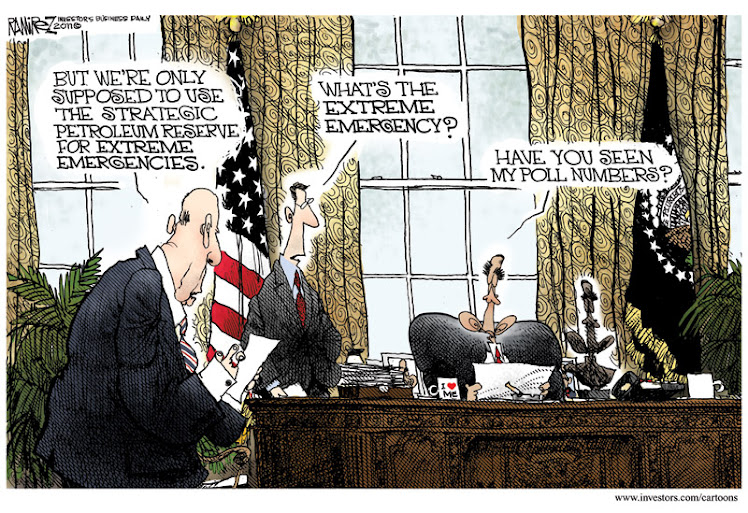
Trump’s National Emergency ‘Workaround’ & the Budget
It should not be forgotten, Trump just
enacted his ‘national emergency ’ to build his Mexico border wall by
diverting funds, without Congressional approval, from other sources in
the US budget—i.e. a clear violation of the US Constitution. That
‘national emergency declaration’ will almost surely be approved by his
current stacked US Supreme Court before the end of Trump’s first term.
When approved, the precedent will allow Trump to repeat the action,
perhaps on an even larger scale. So what’s to stop him from using the
same national emergency precedent to shift other funds in the future
from social programs to the military and defense, as he clearly proposes
in this latest budget?
Some liberals and Democrats may
declare he can never do that. But they said the same about his national
emergency declaration to fund his wall, and he declared it anyway. He
will continue to subvert and destroy long-standing rules and even
Constitutional norms within the government. The national emergency
declaration about funding his wall gave him his foot in the door. Will
the Supreme Court eventually allow him to kick it open now in the
future? One shouldn’t be too surprised with this President, who has
little concern or respect for Democratic rights and institutions.
We now have a precedent in the
national emergency declaration. So what’s to stop him from shifting even
more funds from social programs to war, defense and the military? In
other words, to spend a good part of his proposed additional $2.7
trillion for the Pentagon, and to simply divert the funds from Medicare,
Social Security, Education, etc.? The Democrat Party majority’s control
of the US House of Representatives’ may refuse to pass legislation to
approve Trump’s $2.7 trillion budget shift to the military and defense.
But the precedent now exists allowing him to do it. Trump is intent on
getting what he wants, to pander to his right wing base, and get himself
re-elected. He cares little for Democratic norms or civil liberties.
Don’t underestimate his willingness to shred those liberties and subvert
those norms.
As worrisome as the politics of the US
budget process going forward may yet prove to be, however, the
economics of Trump’s 2019-20 budget are more serious. It represents a
trend that will continue whether or not the budget is passed, either in
the short or the longer term by national emergency declaration.
The $34 Trillion National Debt
Whether Trump’s budget is passed or
not, his fiscal policy (taxation and spending) already represents a
faster escalation of US deficits and therefore Debt.
During Trump’s first two years in
office, US federal government deficits have driven the national debt up
already by $3 trillion: At the end of 2016, when Trump entered office,
the US national debt was $19.5 trillion. Today it is $22.5 trillion.
He’s thus already added $3 trillion, a faster rate per year of debt
accumulation than under even his predecessors, George Bush and Barack
Obama.
The Treasury Advisory Committee, a
long standing committee of private experts who regularly provide advice
to the US Treasury, recently warned the US Treasury that it will have to
sell $12 trillion more US Treasury bonds, bills and notes, over the
next decade if the US is to fund the $1 trillion plus deficits every
year that now coming over the next decade, 2018-2028.
That’s $12 trillion on top of the
current $22.5 trillion national debt! That’s a $34 trillion national
debt by 2028! According to the Congressional Budget Office research,
that $34 trillion national debt will translate into no less than $900
billion a year just in interest payments on the debt by 2028—a roughly
tripling of interest payments that will have to come out of future US
budgets as well, in addition to escalating tax cuts and war-defense
spending.
How will the US government pay for
such escalating interest—as it continues to cut taxes for business,
investors and the wealthy while continuing to accelerate war and defense
spending?
20 Years of Accelerating National Deficits & Debt
The US government’s growing
Deficit-Debt problem did not begin with Trump, however. He just
represents the further acceleration of the Deficit-Debt crisis.
Trump’s escalating deficits and debt
are driven by two main causes: tax cutting and defense-war spending
increases. But this is just a continuation of the same under
Bush-Obama.
Studies show tax revenue shortfall
accounts for at least 60% of US deficits. Another 20% is due to
escalating defense spending, especially the ‘off budget’, so called
‘Overseas Contingency Operations’ (OCO) budget expenditures that go for
direct war spending. The OCO is in addition to the Pentagon’s official
budget, now to rise to $750 billion under Trump’s latest budget
proposal.
The US actual defense budget,
therefore, includes the $750 billion Pentagon bill, plus the OCO direct
war spending. Total defense-war spending also includes additional
‘defense’ spending for Homeland Security and for the CIA’s, NSA’s, and
US State Department’s growing covert military spending for their
‘private’ armies and use of special forces. It further includes spending
for Veterans benefits and military pensions, and for the costs of fuel
used by the military which is indicated in the US Energy Dept. budget
not the Pentagon’s. Add still more ‘defense’ spending on nuclear arms
billed to the Atomic Energy Agency’s budget. And let’s not forget the
$50-$75 billion a year in the US ‘black budget’ that fund’s future
secret military arms and technology, which never appears in print
anywhere in the official US budget document and which only a handful of
Congressional leaders in both the Republican and Democrat parties are
privy to know.
In short, the US ‘defense’ budget is well over $1 trillion a year and is rising by hundreds of billions a year more under Trump.
US wars in the Middle East alone since
2001 have cost the US at minimum $6 trillion, according to various
estimates. But contributing even more than wars to the now runaway
national deficits and debt is the chronic and accelerating tax cutting
that has been going on since 2001 under both Republican and Democrat
presidents and Congresses alike—roughly 80% of which has gone to
business, investors, and the wealthiest 1% households.
The Bush-Obama $14 Trillion Deficit-Debt Escalation
When George Bush took office in 2001
the national debt was $5.6 trillion. When he left it was approximately
$10 trillion. A doubling. When Obama left office in 2016 it had risen to
$19.6 trillion. Another doubling. (Under Trump’s first two years it has
risen another $3 trillion). For a US national debt of $22.5 trillion
today.
Under George W. Bush’s 8 years in
office, the tax cutting amounted to more than $4 trillion. Defense and
war spending accelerated by several trillions as well. The middle east
wars represent the first time in US history that the US cut taxes while
raising war spending. In all previous wars, taxation was raised to help
pay for war spending. Not anymore.
Obama cut another $300 billion in
taxes in 2009 as part of his initial 2009 economic recovery program. He
then extended the Bush tax cuts, scheduled to expire in 2010, for two
more years in 2011-12—at a cost of another $900 billion. He further
proposed, and Congress passed, an additional $806 billion in tax cuts
for business as the US economic recovery faltered in 2010. Obama then
struck a deal with Republicans in January 2013 to extend the Bush tax
cuts of 2001-08 for another entire decade—costing a further $2 trillion
during Obama’s second term in office (and $5 trillion over the next ten
years, 2013-2023). Thus $2 trillion of that further $5 trillion was
paid out on Obama’s watch from 2013-16 as part of the 2013 ‘Fiscal
Cliff’ deal he agreed to with the Republicans.
So both Bush and Obama cut taxes by
approximately $4 trillion each, for $8 trillion total. And defense-war
spending long term costs rose by $6 trillion under both.
Trump’s Deficit-Debt Contribution 2017-18
When added up, Bush-Obama 2001-2016
combined $6 trillion in war-defense spending hikes, plus their
accumulated $8 trillion in tax cutting, roughly accounts for the US
federal deficit-debt increase of $14 trillion, i.e. from $5.6 trillion
in national debt in 2000 to $19.5 trillion by the end of 2016.
To this Trump has since added another
$3 trillion during his first two years in office, which adds up to the
current $22.5 trillion US national debt.
Here’s how Trump has added the $3 trillion more in just two years:
In January 2018 the Trump tax cut
provided a $4.5 trillion windfall tax reduction over the next decade,
2018-2028, targeting businesses, multinational corporations, wealthy
households, and investors. US multinational corporations alone were
allocated nearly half of that $4.5 trillion.
So where did the 2018 Trump (and
continuing Bush-Obama tax cuts) go? Several bank research departments in
2018 estimate that in 2018 alone, the first year of Trump’s tax cuts,
that the S&P 500 largest corporate profits were boosted by no less
than 22% due to the tax cuts. Total S&P 500 profits rose 27% in
2018. So Trump’s tax cuts provided the biggest boost to their bottom
line.
Not surprising, with $1.3 trillion in
corporate stock buybacks and dividend payouts occurring in 2018 as well,
US stock markets continued to rise and shrug off corrections in
February and November that otherwise would have brought the stock market
boom to an end.
But starting this year, 2019, the
middle class will begin paying for those corporate-wealthy reductions.
Already tax refunds for the average household are down 17%, according to
reports. The middle class will pay $1.5 trillion in higher taxes by
2028, as the tax hike bite starts in earnest by 2022.
Another $1.5 trillion in absurd
assumptions by the Trump administration about US economic growth over
the next decade supposedly reduces the Trump’s $4.5 trillion of tax cuts
for the rich and their corporations by another $1.5 trillion. Thus we
get the official reported cost of only $1.5 trillion for the 2018 Trump
tax cuts. But the official, reported ‘only’ $1.5 trillion cost of
Trump’s 2018 tax cuts is the ‘spin and cover-up’. Corporate America,
investors and the wealthy 1% actually get $4.5 trillion, while the rest
of us pay $1.5 trillion starting, now in 2019, and Trump spins the
absurd economic growth estimations over the next decade.
The 2018 Trump tax cuts have reduced
US government revenues by about $500 billion in 2018. Add another $.5
trillion per year in Bush-Obama era tax cuts carrying over for 2017-18,
another $.4 trillion in Trump war and other spending hikes during his
first two years and more than $.6 trillion in interest payments on the
debt—and the total is a further $3 trillion added to the national debt
during Trump’s first two years.
So Bush-Obama add $14 trillion to the
$5.6 trillion debt in 2000. And Trump adds another $3 trillion so far.
There’s the $17 trillion addition to the $5.6 trillion national debt.[1]
And now, according to the Treasury
Advisory Committee, we can expect a further $12 trillion in debt to be
added to the national debt over the coming decade—to give us the $34
trillion and $900 billion a year just in interest charges on that debt!
Total US Debt: 2019
But it gets worse than another $12
trillion. Today’s $22.5 trillion, rising to $34 trillion, is just the US
national government debt. Total US debt includes state and local
government debt, household debt, corporate bond and business commercial
& industrial loan debt, central bank balance sheet debt, and
government agencies (GSEs) debt.
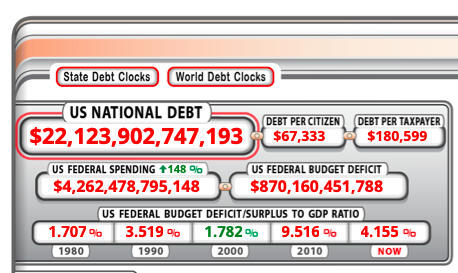
Screenshot from the US National Debt Clock: Real Time (as of March 14, 01:50 UTC)
Household debt is now $13.5 trillion
and rising rapidly for student loans, auto loans, credit cards and other
installment loans. In 2018, State and Local government debt was $3.16
trillion and rising as well. Corporate bond debt today is more than $9
trillion—two thirds of which is considered ‘junk’ and low quality BBB
investment grade bonds, much of which is likely to default in the next
recession. To this must be added other forms of business loan debt,
commercial paper, and the like. The Federal Reserve bank’s balance
sheet is also a form of debt, which is $4 trillion and, according to the
Fed recently, will not be reduced further. Other government housing
agencies, like Fannie Mae, add hundreds of billions more in US debt. All
these account for more than an additional $30 trillion in US debt.
Add these other forms of debt to the
national debt of $22.5 trillion and the total debt in the US rises
easily to around $53 trillion. And add the further $12 trillion
additional national debt on the horizon and further increases in other
forms of debt, and the total US debt may easily exceed $70 trillion by
2028. The $900 billion a year in interest charges assumed by the CBO may
thus be actually too low an estimate.
Who Pays the Debt and to Whom?
To whom do the various interest
payments on debt accrue? To the wealthy and their corporations who buy
the US and corporate bonds and who issue the credit cards, auto loans,
and mortgages; to their banks that offload their debt to the Federal
Reserve central bank during financial crises and recessions; to wealthy
investors who buy government and agency bonds; to wealthy shareholders
who have been getting $1 trillion a year since 2009 in dividends payouts
and capital gains from stock buybacks made possible in large part by
corporate bond raisings; and to wealthy households and corporations that
get the tax cuts that drive the deficit and debt.
Their ‘interest income’ is projected
to continue to accelerate over the next decade, thus further
exacerbating income inequality trends now plaguing the US and getting
worse.
Policies accelerating debt-based
income transfer since 2001 have been expanding and deepening since 2000,
across both Republican and Democrat regimes, from Bush through Obama,
now accelerating even faster under Trump.
For consumer and household debt,
clearly the working class-middle class pays most of the interest on the
debt—via mortgage, auto, student and credit cards, rising state and
local taxation, more federal taxation paying for the Trump tax cuts,
etc. The federal government—and thus the taxpayer–pay the interest on
the government bond debt. The creditors and owners of the debt reap the
benefits, now in the trillions of dollars annually.
The Trump budget proposes to pay for
the US government’s share of the total debt, by transferring the cost of
financing military-defense spending and tax cutting—which creates more
deficit and debt—to those households who aren’t investors and business
owners. But whether Trump gets his budget approved or not is irrelevant.
The deficits and debt will continue to accelerate nonetheless.
And if he does get to shift some of
the cost via extending his national emergency rule to the US spending in
general, not just his wall, the economic consequences will of course
even be worse.
*
Note to readers: please click the share
buttons below. Forward this article to your email lists. Crosspost on
your blog site, internet forums. etc.
This article was originally published on the author’s blog site: Jack Rasmus.
Jack Rasmus
is author of the forthcoming book, ‘The Scourge of Neoliberalism: US
Economic Policy from Reagan to Trump’, Clarity Press, forthcoming summer
2019, and ‘Central Bankers at the End of Their Ropes: Monetary Policy
and the Coming Depression’, Clarity Press, August 2017. He blogs at jackrasmus.com and hosts the weekly radio show, Alternative Visions, on the Progressive Radio Network. His website is http://kyklosproductions.com and tweets at @drjackrasmus. He is a frequent contributor to Global Research.
Note
[1]
Conservatives argue that this excludes rising social program spending
debt, like social security and medicare. But those programs are not
financed out of the US budget (with the exception of the prescription
drugs program for seniors). They have their own tax base, the payroll
tax. What about the 2008-09 bailout? The banks were bailed out by the
Federal Reserve not Congress. And the costs of social program spending
hikes after 2008-2011, were offset by a $1.5 trillion cut in social
spending that started in August 2011—which exempted effectively cuts in
defense spending thereafter.
The original source of this article is Global Research
Copyright © Dr. Jack Rasmus, Global Research, 2019