Published time: 25 Aug, 2019 12:28Edited time: 26 Aug, 2019 10:07

Follow RT on
Russia’s Roscosmos space agency has invented a shield system for protecting satellites from being damaged by flying objects that could smash into them as they hurtle through space.
A patent filed with the Federal Service for Intellectual Property (Rospatent) shows that the two-layer shield, made from aluminum plates, is covered in numerous staggered conical ‘spikes,’ which are coated with a hard alloy. The spaces between the cones are filled in with carbon-fiber-reinforced carbon, a composite material used to build spacecraft and missile noses.
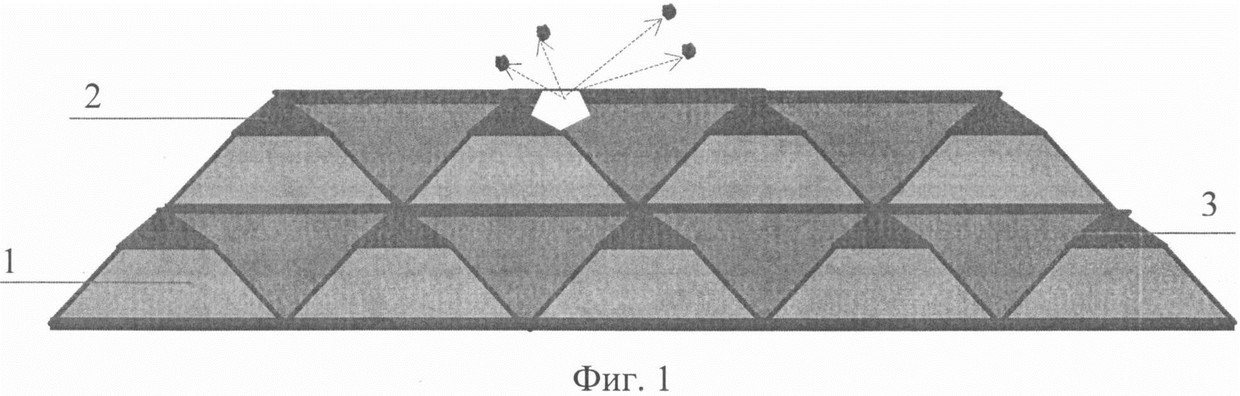
The armor is designed to break objects into smaller fragments which would then be pushed in different directions, hitting the cone-shaped base of the protective shield as the force of the object diminishes. The patent specification notes that the system should be 10 percent lighter than a flat shield.
Satellites and spacecraft currently use a variety of anti-meteorite shields to protect against space debris such as rocks and other “space junk”.
ALSO ON RT.COMRussia invents self-destroying satellite to solve burgeoning ‘space junk’ problem
The International Space Station even changes its orbit when potentially damaging objects loom. Roscosmos also has the ability to control the flight paths of 74 Russian spacecraft.
The space agency says there are up to 700,000 pieces of debris floating around in near-Earth space. Even objects with a diameter of one centimeter can cause significant damage.
Roscosmos recently invented a self-destroying satellite to combat the burgeoning space junk problem which has long been exercising the minds of scientists and engineers.

