Cervantes

Hoy es el día más hermoso de nuestra vida, querido Sancho; los obstáculos más grandes, nuestras propias indecisiones; nuestro enemigo más fuerte, el miedo al poderoso y a nosotros mismos; la cosa más fácil, equivocarnos; la más destructiva, la mentira y el egoísmo; la peor derrota, el desaliento; los defectos más peligrosos, la soberbia y el rencor; las sensaciones más gratas, la buena conciencia, el esfuerzo para ser mejores sin ser perfectos, y sobretodo, la disposición para hacer el bien y combatir la injusticia dondequiera que esté.

MIGUEL DE CERVANTES
Don Quijote de la Mancha.
La Colmena no se hace responsable ni se solidariza con las opiniones o conceptos emitidos por los autores de los artículos.

27 de abril de 2016

Venezuela Doesn't Have Enough Money to Pay for Its Money

  • Billions of new bills in circulation and still more are needed
  • Rampant inflation means gym bags full of cash for dinner
Venezuela’s epic shortages are nothing new at this point. No diapers or car parts or aspirin -- it’s all been well documented. But now the country is at risk of running out of money itself.
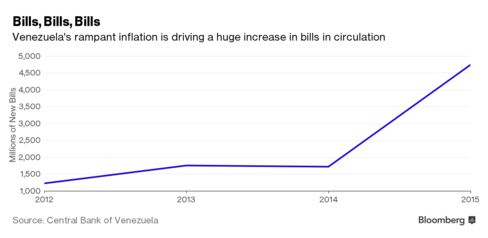
In a tale that highlights the chaos of unbridled inflation, Venezuela is scrambling to print new bills fast enough to keep up with the torrid pace of price increases. Most of the cash, like nearly everything else in the oil-exporting country, is imported. And with hard currency reserves sinking to critically low levels, the central bank is doling out payments so slowly to foreign providers that they are foregoing further business.
Venezuela, in other words, is now so broke that it may not have enough money to pay for its money.
This article is based on interviews with a dozen industry executives, diplomats and former officials as well as internal company and central bank documents. All of the companies declined official comment; the central bank did not respond to numerous requests for interviews and comment.

Thronging Banks

The story began last year when the government of President Nicolas Maduro tried to tamp down a growing currency shortfall. Multi-million-dollar orders were placed with a slew of currency makers ahead of December elections and holidays, when Venezuelans throng banks to cash their bonuses.
At one point, instead of a public bidding process, the central bank called an emergency meeting and asked companies to produce as many bills as possible. The companies complied, only to find payments not fully forthcoming.
Last month, De La Rue, the world’s largest currency maker, sent a letter to the central bank complaining that it was owed $71 million and would inform its shareholders if the money were not forthcoming. The letter was leaked to a Venezuelan news website and confirmed by Bloomberg News.
“It’s an unprecedented case in history that a country with such high inflation cannot get new bills,” said Jose Guerra, an opposition law maker and former director of economic research at the central bank. Late last year, the central bank ordered more than 10 billion bank notes, surpassing the 7.6 billion the U.S. Federal Reserve requested this year for an economy many times the size of Venezuela’s.

World’s Highest Inflation

The currency crisis sheds light on the magnitude of the country’s financial woes and its limited ability to remedy them as oil -- the mainstay of its economy -- continues to flatline. Venezuela’s inflation, the world’s highest, is expected to rise this year to close to 500 percent, according to the International Monetary Fund.
The first signs of the currency shortage date back to 2014 when the government began increasing shipments of bank notes as wallet-busting wads of cash were already needed for simple transactions. Venezuelans spend hours waiting in line for consumer staples, lining up first at banks and cash machines, often carrying the loot in backpacks and gym bags to pay for dinner out.
Ahead of the 2015 congressional elections, the central bank tapped the U.K.’s De La Rue, France’s Oberthur Fiduciaire and Germany’s Giesecke & Devrient to bring in some 2.6 billion notes, according to bank documents and people familiar with the deals. Before the delivery was completed, the bank approached the companies directly for more.
De La Rue took the lion’s share of the 3-billion-note order and enlisted the Ottawa-based Canadian Bank Note Company to ensure it could meet a tight end-of-year deadline.

Sniper Cover

The cash arrived in dozens of 747 jets and chartered planes. Under cover of security forces and snipers, it was transferred to armored caravans where it was spirited to the central bank in dead of night.
While the cash was still arriving -- at times, multiple planeloads a day -- authorities set their sights on the year ahead. In late 2015, the central bank more than tripled its original order, offering tenders for some 10.2 billion bank notes, according to industry sources.
But currency companies were worried. According to company documents, De La Rue began experiencing delays in payment as early as June. Similarly, the bank was slow to pay Giesecke & Devrient and Oberthur Fiduciaire. So when the tender was offered, the government only received about 3.3 billion in bids, bank documents show.
“Initially, your eyes grow as big as dish plates," said one person familiar with matter. “An order big enough to fill your factory for a year, but do you want to completely expose yourself to a country as risky as Venezuela?”
Further complicating matters is the sheer amount of bills needed for basic transactions. Venezuela’s largest bill, the 100-bolivar note, today barely pays for a loose cigarette at a street kiosk.

Uncharted Territory

As early as 2013, the central bank commissioned studies for 200 and 500 bolivar notes, former monetary officials say. Despite repeated assurances, no new denominations have been ordered, pushing Venezuela into uncharted territory by its refusal to produce larger bills while not fully paying providers.
Companies are backing away. With its traditional partners now unenthusiastic about taking on new business, the central bank is in negotiations with others, including Russia’s Goznack, and has a contract with Boston-based Crane Currency, according to documents and industry sources.
Steve Hanke, a professor of applied economics at Johns Hopkins University, who has studied hyperinflation for decades, says that to maintain faith in the currency when prices spiral, governments often add zeros to bank notes rather than flood the market.
“It’s a very bad sign to see people running around with wheelbarrows full of money to buy a hot dog,” he said. “Even the cash economy starts breaking down."

How Americans Blow $1.7 Trillion in Retirement Savings

Economists discover we're pretty shortsighted, and it's costing us.

You’re traveling across the desert, feeling parched and looking dirty. You take a long drink of water from your canteen, then wash your face with the rest. As you’ll discover before you die of thirst in a day or two, you just made a huge mistake.
Outside of cartoons, nobody is this stupid. But people make the same kind of mistake all the time, putting their current happiness (vacations, flat screens, new cars) way above their future well-being. 
Economists call this kind of irrationality “present bias.” And according to a National Bureau of Economic Research study, it and other biases are holding back millions of Americans from saving enough money for that ultimate future need: retirement.

How much money? Try $1.7 trillion on for size. That's 12 percent of the $14 trillion in U.S. individual retirement and 401(k) accounts.
Another error economists worry about is “exponential-growth bias.” This is the failure to realize how savings compound over time. Save $100 at a 7 percent rate of return, and you’ll have only an extra $7 next year. But the gains compound year after year. In 10 years, your investment will nearly double and be growing at $14 a year. In another 10 years, it will almost double again and be yielding $27 a year.
Some people have a hard time wrapping their heads around this concept. They think of money as growing in a linear way, by more or less the same amount each year. And that makes saving and investing seem much less attractive than the trip to Cancun or the 40-inch television.
The researchers looked at survey data to try to figure out how many people are afflicted by more serious versions of these two biases. To find their “exponential-growth bias,” people were asked to predict how much an asset would increase over time. About seven in 10 underestimated its growth.
To test their “present bias,” respondents were asked such questions as: “Would you rather receive $100 today or $120 in 12 months?” For those not interested in waiting, the survey raised the stakes: What about $130 in 12 months? After analyzing the answers, researchers classified 55 percent of people as “present biased” on money matters.
What do a bunch of math problems and hypothetical questions have to do with the real world? The study, which appears in the NBER’s Bulletin on Aging & Health this week, found there was a strong relationship between respondents’ biases and their retirement account balances. The more biased they were, the less they'd saved in a 401(k) or other account. The connection held up even after researchers controlled for income, education, intelligence, and financial literacy.
If somehow you could eliminate these two biases, retirement savings would immediately jump 12 percent.
Of course, it’s not easy to wipe away irrational behavior. (We've all streamed another Netflix episode rather than go to sleep, knowing full well we’d regret it in the morning.) It may help, however, simply to be aware of your own shortcomings. The study tried to measure self-awareness and found a link to higher retirement savings.

In other words, if you know you’re prone to doing something stupid, you may be more likely to ask for help. Or sometimes you can essentially trick yourself into doing the right thing: For example, to combat present bias, you might agree to have your 401(k) contribution automatically increased not now but early next year—just as your annual raise (assuming you get one) goes into effect.
Then you can rely on that other shortcoming many of us share: forgetfulness.


Report: Cyber Attackers Infect Nuclear Power Plant Systems With Computer Virus

warning-577062_960_720By Mac Slavo The threat of a large-scale terrorist attack caused by chemical, biological, radiological or nuclear weapons of mass destruction has been at the forefront of investigations in recent months, so much so that in March the White House issued a warning highlighting the four most likely scenarios for a nuclear attack on U.S. soil.
Following the attack in Brussels earlier this year it was learned that terrorists had not only targeted nuclear facilities in Belgium, but that the chief of the power plant in question had been staked out, recorded and followed. A security guard at the nuclear plant also died under mysterious circumstances.
Now, according to a report from Zero Hedge, another nuclear plant has been targeted, this time with a virus that has infected its computer systems:
Remember when “someone” used the Stuxnet virus, or rather worm, in an Iranian nuclear plant several years ago to freeze Iranian nuclear production, leading to a major diplomatic scandal involving the spy agencies of both the US and Israel, as the world learned that in the present day industrial sabotage only needed a flash drive and a computer virus to render even the most sophisticated piece of industrial machinery obsolete? Well, moments ago, Bloomberg reported that a computer virus was discovered in a German nuclear power plant.
  • A computer virus was discovered at the Gundremmingen nuclear power plant in Bavaria, German news service DPA reported.
  • No danger to employees or populace
  • Power plant noticed the virus in its Block B on Mon.
  • RWE specialists to determine how malware entered computer system built in 2008
BR (google translated) is reporting that the malware is thought to be brought in by a data carrier, and the affected portion of the system is the fuel assembly loading area.
The affected IT system is part of the fuel assembly loading machine of the power plant. This raises, for example, old fuel from the reactor core and transports it to the storage pool. An influence on the control of these loading machine has the IT system according to the operator but not. In the power plant all other safety-related IT systems have been checked without finding the meantime.
The competent authority and the Federal Office for Information Security (BSI) have been informed. The reconnaissance takes place with the assistance of IT specialists in the RWE Group. The malicious software may have been introduced by a data carrier.
Ironically, in the case of the Iran “infection”, one of the suspected parties was Germany’s own Siemens. It would be painfully ironic if the same someone had infected a Germany nuke at roughly the same time.
While the WMD threat once again appears to be centralized in Europe, the fact is that the United States has scores of power plants across the country and in all likelihood terrorists, whether Middle Eastern, state-sponsored, or rogue organizations, are actively looking for ways to cause maximum damage to American citizens.
An attack on a nuclear facility may be improbable, but it’s certainly a real and highly dangerous possibility that could leave tens of thousands of people dead and entire regions of the United States uninhabitable.
Moreover, the threat isn’t restricted to just to nuclear plants. With our porous southern border and no immigration control to speak of, those who mean to do us harm can easily cross into the United States, WMD in hand, to launch an attack on the American people.
In fact, in the summer of 2014 the Texas Rangers were dispatched to the southern border after nuclear materials that could be used in a dirty bomb attack were stolen in Mexico.
In 2011 it was reported that Customs and Border Protection had identified and seized a nuclear weapon of some kind as it was being smuggled into the United States.
The threat is most certainly real and as completely insane as it may sound, it’s only a matter of time before such a CBRN weapon is used in a large population center in the United States or Europe.

Everyday Carry Gear – 11 Items You Should Always Have on You (Ad)

Perhaps it’s time Americans consider preparing for a nuclear attack:
Regardless of whether you decide to stay or bug out, there are a few items you should strongly consider adding to your prepping supplies. Aside from the usual stuff like food, water, tools, weapons, and medical supplies, you’ll probably need the following:
You’ll find that everything on this list will also be useful for other scenarios like nuclear war and dirty bomb attacks. Truth be told there are countless ways that you or family could face a radioactive threat, but with the right mindset, gear, and supplies, you can survive even the worst nuclear disasters.
Related Reading:
Click here to subscribe: Join over one million monthly readers and receive breaking news, strategies, ideas and commentary.
You can read more from Mac Slavo at his site SHTFplan.com.

Did Goldman Sachs’ Latest Move Into Main Street Banking Just Give Us A Warning About The Coming Financial Crisis?

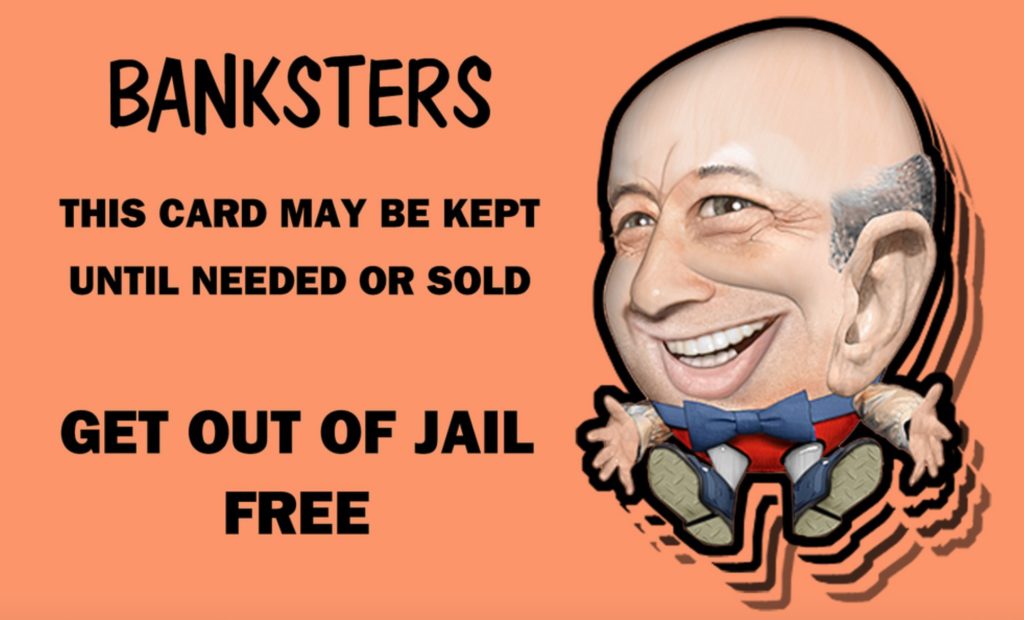
banksters get out of jail freeBy Mac Slavo
If there were ever a signal that large investment banks may be preparing for financial crisis and that they’ll be using your money to bail themselves out when it hits, this could be it.
According to a new report from the Financial Times via The Daily Star, mega-banking giant Goldman Sachs is now getting into the retail banking business and looking for more depositors to help fund their operations. The bank has reportedly “been under pressure to develop new streams of funding” after posting lower than usual equity returns in the first quarter of 2016. In response, Goldman recently acquired a portfolio of 145,000 retail depositors from GE Capital totaling some $16 billion in deposits.
Goldman now intends to aggressively pursue retail depositors whose accounts they will then tap to help fund their investing and trading operations:
The bank last week launched GSBank.com, a platform it inherited via the acquisition of a $16bn book of deposits from GE Capital.
Through that deal it gained about 145,000 retail depositors and is now seeking more, offering annual interest rates of 1.05 per cent on a savings account – many times better than the rates of the biggest US brick-and-mortar lenders such as Citibank, JPMorgan Chase or Bank of America. Stephen Scherr, Goldman’s chief strategy officer, said the aim was to broaden sources of funding for GS Bank, its New York State-chartered lender. Until now, the unit has focused on wholesale funding sources and so-called “brokered deposits”, which are bulk sums that banks acquire from brokers in exchange for high interest rates.
By tapping regular retail depositors, Mr Scherr said, the bank can open up “a different avenue to use, with a different orientation and a different tenor”.
For as little as $1 you can now start your own savings account with Goldman at a whopping annual interest rate of 1.05%.
What could possibly go wrong when you deposit your money with one of the firms directly responsible for the fraud that led to Crash of 2008? They are, after all, doing God’s work according to Goldman CEO Lloyd Blankfein.
While depositing your money at Goldman’s new bank could well be a spiritual experience, we highlight for our readers the fact that Goldman is doing this for one specific reason: to fund their trading operations with new deposits from retail customers. And if they’re doing business anything like they did ahead of the 2008 crash, we can assume that when the whole thing blows up again Goldman is going to be in serious trouble, and that means depositors will be in serious trouble. Back in 2008 Goldman Sachs was “forced” to take a $10 billion TARP bailout from the Federal government.
According to Federal Reserve Vice Chairman Stanley Fischer, the next time such a crisis strikes, there will be bailouts, but not like before. This time, those bailouts, dubbed “bail-ins” will not come from the government, but rather, from you, the bank account holder.
Recent comments delivered by Federal Reserve Vice Chairman Stanley Fischer suggest that not only are global and domestic economies still struggling, but the U.S. government itself is preparing financial contingency plans in anticipation of another widespread economic event.
However, this time around, according to Fischer, the government won’t be bailing out financial institutions in need of cash. Instead, failing banks will turn directly to their unsecured creditors when they need money. And within this context, that means you:
As part of this approach, the United States is preparing a proposal to require systemically important banks to issue bail-inable long-term debt that will enable insolvent banks to recapitalize themselves in resolution without calling on government funding–this cushion is known as a “gone concern” buffer.
Though Fischer doesn’t detail exactly what “bail-inable long term debt” actually is, one only needs to look to Europe, namely Cyprus, to understand what he means.
When the Cypriot banking system collapsed because of an inability to service its debt in 2013, the government forced bank depositors to cover the debts. This led to banks forcibly seizing funds from depositor accounts in order to pay their debts.

Goldman Sachs needs more money for their Wall Street gambling houses.
They’re coming to you to get it.
And when the whole thing detonates, they’ll simply seize your funds to compensate for their losses… and every other retail bank in America will do the same.
Just so we’re clear, we are all bank creditors by these definitions, thus the regulations being created apply not to just large bond holders, but every individual depositor.
Notice how they didn’t say “in case future bank rescues are necessary.” That’s because they know what’s coming.
…When the next banking crisis hits the United States you can be assured that creditors (i.e. individual depositors) will be forced to ‘bail them in.’
…So, if you’ve got any significant amount of money at financial institutions, you’d better think twice about how safe it is.
You’ve been warned.
Hat tip Durango Kid
Image Credit
Click here to subscribe: Join over one million monthly readers and receive breaking news, strategies, ideas and commentary.
You can read more from Mac Slavo at his site SHTFplan.com.

Censored, Surveilled, Watch Listed and Jailed. Freest Country in the World?

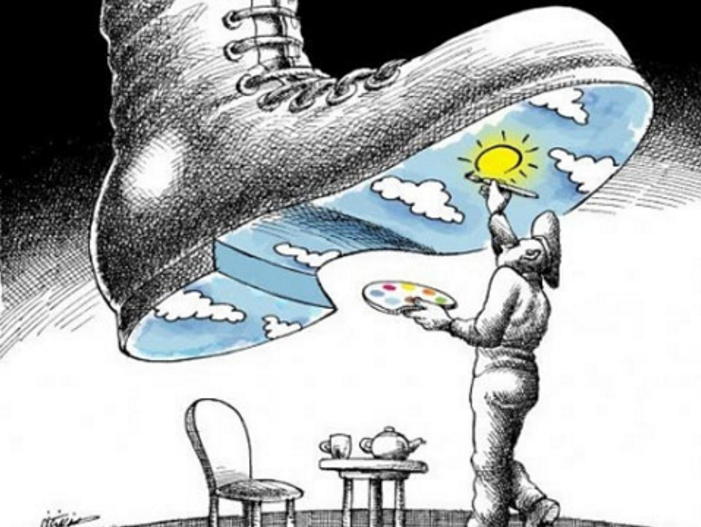
boot_on_face By John W. Whitehead
“You had to live—did live, from habit that became instinct—in the assumption that every sound you made was overheard, and, except in darkness, every movement scrutinized.”—George Orwell, 1984
In past ages, those who dared to speak out against tyranny—viewed as an act of treason—were blinded, castrated, disfigured, mutilated, rendered mute by having their tongues cut out of their heads, and ultimately crucified.
In the American police state, the price to be paid for speaking truth to power (also increasingly viewed as an act of treason) is surveillance, censorship, jail and ultimately death.
It’s a diabolically ingenious tactic for muzzling, disarming and ultimately eliminating one’s critics or potential adversaries.
However, where many Americans go wrong is in assuming that you have to be doing something illegal or challenging the government’s authority in order to be flagged as a suspicious character, labeled an enemy of the state and locked up like a dangerous criminal.
In fact, as I point out in my book Battlefield America: The War on the American People, all you really need to do is use certain trigger words, surf the internet, communicate using a cell phone, drive a car, stay at a hotel, purchase materials at a hardware store, take flying or boating lessons, appear suspicious, question government authority, or generally live in the United States.
With the help of automated eyes and ears, a growing arsenal of high-tech software, hardware and techniques, government propaganda urging Americans to turn into spies and snitches, as well as social media and behavior sensing software, government agents are spinning a sticky spider-web of threat assessments, behavioral sensing warnings, flagged “words,” and “suspicious” activity reports aimed at snaring potential enemies of the state.
It’s the American police state’s take on the dystopian terrors foreshadowed by George Orwell, Aldous Huxley and Phillip K. Dick all rolled up into one oppressive pre-crime and pre-thought crime package.
What’s more, the technocrats who run the surveillance state don’t even have to break a sweat while monitoring what you say, what you read, what you write, where you go, how much you spend, whom you support, and with whom you communicate. Computers now do the tedious work of trolling social media, the internet, text messages and phone calls for potentially anti-government remarks—all of which is carefully recorded, documented, and stored to be used against you someday at a time and place of the government’s choosing.
While this may sound like a riff on a bad joke, it’s a bad joke with “we the people” as the punchline. Yet it is no laughing matter that Americans are being jailed for growing orchids, feeding whales, collecting rainwater, and praying in their backyards. There is nothing humorous about Americans having their families terrorized by SWAT teams, their pets killed, their children shot, their homes trashed and their privacy shredded. And there’s really not much comic relief to be found when the citizenry is forced to pay their own government to jail, spy on, censor, terrorize and kill them.
The following activities are guaranteed to get you censored, surveilled, eventually placed on a government watch list, possibly detained and potentially killed.
Laugh at your own peril.
Use harmless trigger words like cloud, pork and pirates: The Department of Homeland Security has an expansive list of keywords and phrases it uses to monitor social networking sites and online media for signs of terrorist or other threats. While you’ll definitely send up an alert for using phrases such as dirty bomb, Jihad and Agro terror, you’re just as likely to get flagged for surveillance if you reference the terms SWAT, lockdown, police, cloud, food poisoning, pork, flu, Subway, smart, delays, cancelled, la familia, pirates, hurricane, forest fire, storm, flood, help, ice, snow, worm, warning or social media.
Use a cell phone: Simply by using a cell phone, you make yourself an easy target for government agents—working closely with corporations—who can listen in on your phone calls, read your text messages and emails, and track your movements based on the data transferred from, received by, and stored in your cell phone. Mention any of the so-called “trigger” words in a conversation or text message, and you’ll get flagged for sure.
Drive a car: Unless you’ve got an old junkyard heap without any of the gadgets and gizmos that are so attractive to today’s car buyers (GPS, satellite radio, electrical everything, smart systems, etc.), driving a car today is like wearing a homing device: you’ll be tracked from the moment you open that car door thanks to black box recorders and vehicle-to-vehicle communications systems that can monitor your speed, direction, location, the number of miles traveled, and even your seatbelt use. Once you add satellites, GPS devices, license plate readers, and real-time traffic cameras to the mix, there’s nowhere you can go on our nation’s highways and byways that you can’t be followed. By the time you add self-driving cars into the futuristic mix, equipped with computers that know where you want to go before you do, privacy and autonomy will be little more than distant mirages in your rearview mirror.
Attend a political rally: Enacted in the wake of 9/11, the Patriot Act redefined terrorism so broadly that many non-terrorist political activities such as protest marches, demonstrations and civil disobedience were considered potential terrorist acts, thereby rendering anyone desiring to engage in protected First Amendment expressive activities as suspects of the surveillance state.
Express yourself on social media: The FBI, CIA, NSA and other government agencies are investing in and relying oncorporate surveillance technologies that can mine constitutionally protected speech on social media platforms such as Facebook, Twitter and Instagram in order to identify potential extremists and predict who might engage in future acts of anti-government behavior. A decorated Marine, 26-year-old Brandon Raub was targeted by the Secret Service because of his Facebook posts, interrogated by government agents about his views on government corruption, arrested with no warning, labeled mentally ill for subscribing to so-called “conspiratorial” views about the government, detained against his will in a psych ward for having “dangerous” opinions, and isolated from his family, friends and attorneys.
Serve in the military: Operation Vigilant Eagle, the brainchild of the Dept. of Homeland Security, calls for surveillance of military veterans returning from Iraq and Afghanistan, characterizing them as extremists and potential domestic terrorist threats because they may be “disgruntled, disillusioned or suffering from the psychological effects of war.” Police agencies are also using Beware, an “early warning” computer system that tips them off to a potential suspect’s inclination to be a troublemaker and assigns individuals a color-coded threat score—green, yellow or red—based on a variety of factors including one’s criminal records, military background, medical history and social media surveillance.
Disagree with a law enforcement official: A growing number of government programs are aimed at identifying, monitoring and locking up anyone considered potentially “dangerous” or mentally ill (according to government standards, of course). For instance, a homeless man in New York City who reportedly had a history of violence but no signs of mental illness was forcibly detained in a psych ward for a week after arguing with shelter police. Despite the fact that doctors cited no medical reason to commit him, the man was locked up in accordance with a $22 million program that monitors mentally ill people considered “potentially” violent. According to the Associated Press, “A judge finally ordered his release, ruling that the man’s commitment violated his civil rights and that bureaucrats had meddled in his medical treatment.”
Call in sick to work: In Virginia, a so-called police “welfare check” instigated by a 58-year-old man’s employer after he called in sick resulted in a two-hour, SWAT team-style raid on the man’s truck and a 72-hour mental health hold. During the standoff, a heavily armed police tactical team confronted Benjamin Burruss as he was leaving an area motel, surrounded his truck, deployed a “stinger” device behind the rear tires, launched a flash grenade, smashed the side window in order to drag him from the truck, handcuffed and searched him, and transported him to a local hospital for a psychiatric evaluation and mental health hold. All of this was done despite the fact that police acknowledged they had no legal basis nor probable cause for detaining Burruss, given that he had not threatened to harm anyone and was not mentally ill.
Limp or stutter: As a result of a nationwide push to certify a broad spectrum of government officials in mental health first-aid training (a 12-hour course comprised of PowerPoint presentations, videos, discussions, role playing and other interactive activities), more Americans are going to run the risk of being reported for having mental health issues by non-medical personnel. Mind you, once you get on such a government watch list—whether it’s a terrorist watch list, a mental health watch list, or a dissident watch list—there’s no clear-cut way to get off, whether or not you should actually be on there. For instance, one 37-year-old disabled man was arrested, diagnosed by police and an unlicensed mental health screener as having “mental health issues,” apparently because of his slurred speech and unsteady gait, and subsequently locked up for five days in a mental health facility against his will and with no access to family and friends. A subsequent hearing found that Gordon Goines, who suffers from a neurological condition similar to multiple sclerosis, has no mental illness and should not have been confined.
Appear confused or nervous, fidget, whistle or smell bad: According to the Transportation Security Administration’s 92-point secret behavior watch list for spotting terrorists, these are among some of the telling signs of suspicious behavior: fidgeting, whistling, bad body odor, yawning, clearing your throat, having a pale face from recently shaving your beard, covering your mouth with your hand when speaking and blinking your eyes fast. You can also be pulled aside for interrogation if you “have ‘unusual items,’ like almanacs and ‘numerous prepaid calling cards or cell phones.’” One critic of the program accurately referred to the program as a “license to harass.”
Allow yourself to be seen in public waving a toy gun or anything remotely resembling a gun, such as a water nozzle or a remote control or a walking cane, for instance: No longer is it unusual to hear about incidents in which police shoot unarmed individuals first and ask questions later. John Crawford was shot by police in an Ohio Wal-Mart for holding an air rifle sold in the store that he may have intended to buy. Thirteen-year-old Andy Lopez Cruz was shot 7 times in 10 seconds by a California police officer who mistook the boy’s toy gun for an assault rifle. Christopher Roupe, 17, was shot and killed after opening the door to a police officer. The officer, mistaking the Wii remote control in Roupe’s hand for a gun, shot him in the chest. Another police officer repeatedly shot 70-year-old Bobby Canipe during a traffic stop. The cop saw the man reaching for his cane and, believing the cane to be a rifle, opened fire.
Stare at a police officer: Miami-Dade police slammed the 14-year-old Tremaine McMillian to the ground, putting him in a chokehold and handcuffing him after he allegedly gave them “dehumanizing stares” and walked away from them, which the officers found unacceptable.
Appear to be pro-gun, pro-freedom or anti-government: You might be a domestic terrorist in the eyes of the FBI (and its network of snitches) if you: express libertarian philosophies (statements, bumper stickers); exhibit Second Amendment-oriented views (NRA or gun club membership); read survivalist literature, including apocalyptic fictional books; show signs of self-sufficiency (stockpiling food, ammo, hand tools, medical supplies); fear an economic collapse; buy gold and barter items; subscribe to religious views concerning the book of Revelation; voice fears about Big Brother or big government; expound about constitutional rights and civil liberties; or believe in a New World Order conspiracy. This is all part of a larger trend in American governance whereby dissent is criminalized and pathologized, and dissenters are censored, silenced or declared unfit for society.
Attend a public school: Microcosms of the police state, America’s public schools contain almost every aspect of the militarized, intolerant, senseless, overcriminalized, legalistic, surveillance-riddled, totalitarian landscape that plagues those of us on the “outside.” From the moment a child enters one of the nation’s 98,000 public schools to the moment she graduates, she will be exposed to a steady diet of draconian zero tolerance policies that criminalize childish behavior, overreaching anti-bullying statutes that criminalize speech, school resource officers (police) tasked with disciplining and/or arresting so-called “disorderly” students, standardized testing that emphasizes rote answers over critical thinking, politically correct mindsets that teach young people to censor themselves and those around them, and extensive biometric and surveillance systems that, coupled with the rest, acclimate young people to a world in which they have no freedom of thought, speech or movement. Additionally, as part of the government’s so-called ongoing war on terror, the FBI—the nation’s de facto secret police force—is now recruiting students and teachers to spy on each other and report anyone who appears to have the potential to be “anti-government” or “extremist” as part of its “Don’t Be a Puppet” campaign.
Speak truth to power: Long before Chelsea Manning and Edward Snowden were being castigated for blowing the whistle on the government’s war crimes and the National Security Agency’s abuse of its surveillance powers, it was activists such as Martin Luther King Jr. and John Lennon who were being singled out for daring to speak truth to power. These men and others like them had their phone calls monitored and data files collected on their activities and associations. For a little while, at least, they became enemy number one in the eyes of the U.S. government.
There’s always a price to pay for standing up to the powers-that-be.
Yet as this list shows, you don’t even have to be a dissident to get flagged by the government for surveillance, censorship and detention.
All you really need to be is a citizen of the American police state.
Constitutional attorney and author John W. Whitehead is the founder and president of The Rutherford Institute, where this article first appeared. He is also the author of Battlefield America: The War on the American People and A Government of Wolves: The Emerging American Police State.
On the 30th Anniversary of Chernobyl, Here’s What We Are Still Not Being Told

By Claire Bernish
On the 30th anniversary of the world’s worst nuclear catastrophe yet, a new report shows radioactive contamination from the 1986 explosion at Chernobyl in Ukraine still lingers in startlingly large amounts across the border in neighboring Belarus.
In an exclusive report by the Associated Press, fresh milk from a Belarusian dairy farm contained a radioactive isotope, traceable to the Chernobyl disaster, at “levels 10 times higher than the nation’s food safety limits” — thirty years after the accident occurred.
Though the AP turned to a laboratory to test the milk, dairy farmer Nikolai Chubenok called the results “impossible.”
“There is no danger,” Chubenok asserted to AP journalists at his farm, just 28 miles from the site of the 1986 explosion and meltdown. “How can you be afraid of radiation?”
Though Chubenok and the Belarusian government — itself notoriously authoritarian and intent on denying the dangers still present — might insist on the area’s safety, other reports from doctors and scientists paint the landscape in a vastly different light.
Belarusian milk, though indicative, is inadequate in illustrating the astronomical devastation of the Chernobyl legacy.
In 1996, ten years after the explosions, meltdown, and raging nuclear fires at the Chernobyl Nuclear Power Plant, the International Atomic Energy Agency (IAEA) estimated the disaster had spewed “400 times more radioactive material into the Earth’s atmosphere than the atomic bomb dropped on Hiroshima.”
Lichens and mushrooms so thoroughly absorbed this radioactivity, in particular radioactive cesium, that reindeer over 1,000 miles away in Norway — where the meat is eaten — remain unfit for human consumption. Wormwood Forest, near the accident site, stands as an eerie monument of contamination with dead trees turned ginger-colored. Mass evacuations of humans from the areas surrounding Chernobyl naturally led to an explosion in wildlife numbers in species such as boars and wolves. And, as scientists discovered in 2011, birds displayed 5 percent smaller brains than average due to radioactivity lingering in the atmosphere.
Estimating the total number of human casualties resulting from the spectacularly failed foray into nuclear energy has largely been an exercise in futility. Greenpeace estimated ten years ago the total number of cancer cases resulting from Chernobyl would top 250,000 — with around 93,000 of those being fatal. Based on a Belarusian study, Greenpeace surmised 60,000 people had perished in Russia and potentially an additional 140,000 in the Ukraine and Belarus would die directly as a result of Chernobyl radioactive contamination. That study challenged the lowball estimate of 4,000 total deaths proffered by the United Nations in 2005 — a figure eventually abandoned once it realized “unacceptable uncertainties” made quantifying fatalities too tricky.
As Timothy A. Mousseau wrote for U.S. News & World Report,
in the past decade population biologists have made considerable progress in documenting how radioactivity affects plants, animals, and microbes…
Our studies provide new fundamental insights about consequences of chronic, multigenerational exposure to low-dose ionizing radiation … The cumulative effects of these injuries result in lower population sizes and reduced biodiversity in high-radiation areas.
Radiation exposure has caused genetic damage and increased mutation rates in many organisms in the Chernobyl region. So far, we have found little convincing evidence that many organisms there are evolving to become more resistant to radiation.
In myriad ways, the Chernobyl catastrophe earned the distinction of being a darkly pivotal moment in history — not only did world perception of nuclear power drastically change, but an unsuccessful attempt by government to downplay the extent of the accident is widely believed to have cemented the downfall of the Soviet regime.
Though the devastation at Fukushima often earns comparisons to Chernobyl, the latter still stands dubiously as the worst civic nuclear calamity in history. Thirty years after Chernobyl became a household name, its impacts are still experienced on an eye-opening scale.
Perhaps, when considering both Chernobyl and Fukushima, it’s imperative we ask whether risks of potentially devastating consequences resultant of human error or technical failure could possibly be worth our continued attempts to harness nuclear energy — particularly when advances in solar and wind could make the long-term ‘experiment’ technologically and critically obsolete.
This article (On the 30th Anniversary of Chernobyl, Here’s What We Are Still Not Being Told) is free and open source. You have permission to republish this article under a Creative Commons license with attribution to Claire Bernish and theAntiMedia.org. Anti-Media Radio airs weeknights at 11pm Eastern/8pm Pacific. If you spot a typo, email edits@theantimedia.org.

Economy In Decline: Apple Reports Massive Revenue Decline As iPhone Sales Plummet Dramatically

Apple-iPhone-And-Apple-Computer-Public-DomainBy Michael Snyder
Corporate revenues in the United States have been falling for quite some time, but now some of the biggest companies in the entire nation are reporting extremely disappointing results.  On Tuesday, Apple shocked the financial world by reporting that revenue for the first quarter had fallen 7.4 billion dollars compared to the same quarter last year.  That is an astounding plunge, and it represents the very first year-over-year quarterly sales decline that Apple has experienced since 2003.  Analysts were anticipating some sort of drop, but nothing like this.  And of course last week we learned that Google and Microsoft also missed revenue and earnings projections for the first quarter of 2016.  The economic crisis that began during the second half of 2015 is really starting to take hold, and even our largest tech companies are now feeling the pain.
This wasn’t supposed to happen to Apple.  No matter what else has been going on with the U.S. economy, Apple has always been unshakeable.  Even during the last recession we never saw a year-over-year decline like this…
Apple today announced financial results for the second fiscal quarter (first calendar quarter) of 2016. For the quarter, Apple posted revenue of $50.6 billion and net quarterly profit of $10.5 billion, or $1.90 per diluted share, compared to revenue of $58 billion and net quarterly profit of $13.6 billion, or $2.33 per diluted share, in the year-ago quarter. As expected, the year-over-year decline in quarterly revenue was the first for Apple since 2003.
I think that this announcement by Apple is waking a lot of people up.  The global economic slowdown is real, and we can see this in iPhone sales.  During the first quarter, Apple sold 16 percent fewer iPhones than it did during the same quarter in 2015.  This is the very first year-over-year quarterly sales decline for the iPhone ever.  Here are some of the specific sales figures from the Apple announcement…
Apple sold 51.1 million iPhones during the quarter, down from 61.2 million a year earlier, while Mac sales were 4.03 million units, down from from 4.56 million units in the year-ago quarter. iPad sales were also down once again, falling to 10.25 million from 12.6 million.
Once these numbers hit the wires, shares of Apple immediately began to plummet during after-hours trading.  In fact, USA Today is reporting that Apple has already lost 43 billion dollars in market value since the announcement…
Shares of Apple are getting hit roughly 8% in after-hours trading, tumbling to $96.67. They closed in regular trading at $104.35, or down 0.7%, putting them down 0.9% for the year. The downward move in after-hours trading means the company shed $43 billion in market value based on after-hours trading.
Wow.

Meanwhile, shares of Twitter are crashing in after-hours trading after the social media giant also announced very disappointing results.  The stock has now dripped below 16 dollars a share, and the company continues to lose tremendous amounts of money…
For all its other travails, Twitter is unprofitable. It narrowed its loss but still recorded a loss of $79.7 million, or 12 cents a share, compared with a loss of $162.4 million, or 25 cents a share, in the year-ago quarter.
Of course it isn’t just the tech giants that are troubled these days.
On Tuesday we learned that same-store sales for Chipotle declined by a whopping 29.7 percent during the first quarter, and appliance manufacturer Whirlpool has seen sales fall all over the planet…
Whirlpool, the world’s biggest appliance manufacturer, has become the poster child for the deep challenges facing multinational companies these days.
– Latin American sales plunged 22%.
– Revenue fell 8% in Europe, Middle East and Africa.
– Asia sales dipped 2%.
When is it finally going to sink in for most people?  The global economy is slowing down significantly, and the next global economic crisis is already here.
Of course the oil companies are feeling more pain than anyone else.  According to CNN, the crash in the price of oil has cost the 40 largest publicly-traded U.S. oil producers 67 billion dollars…
American oil companies are drowning in a sea of red ink.
The crash in crude oil prices caused a stunning $67 billion in combined losses by 40 publicly-traded U.S. oil producers last year, according Energy Information Administration research. And the bleeding is expected to continue at least early this year for many.
The losses surpassed $1 billion each from struggling oil companies like EOG Resources (EOG), Devon Energy (DVN) and Linn Energy (LINE) as well as SandRidge Energy (SD), the shale oil driller that recently admitted it’s exploring a bankruptcy filing.
That is an astounding amount of money.
These days we throw around terms like “millions” and “billions” so much that they almost lose their meaning.
But this is real money that we are talking about here.
In recent days, Barack Obama has been running around boasting that he saved the world economy from another Great Depression.  But that isn’t true at all.  Instead, our “leaders” have simply set the stage for a larger and more painful crisis.  I like the way that Doug Casey recently put it…
You’ve got to remember that all of these governments and central banks all around the world have driven interest rates not just to zero, but to negative levels in some cases… and they are simultaneously printing up trillions of currency units. And even while they are desperately doing that the economy is falling apart in lots of different ways.
…They’ve created a super-bubble in bonds, a bubble in stocks, and meanwhile commodities have collapsed and are below production costs in many cases.
…The economy is going to be very, very bad… It’s the next stage of what I call the Greater Depression. 
Whether you want to call it a “Great Depression”, a “Greater Depression” or “The Greatest Depression”, the truth is that we are heading into a period of time that will be unlike anything any of us have ever experienced before.
The greatest debt bubble in the history of the planet is starting to implode, and this time the central bankers and the politicians are not going to be able to put the pieces back together again.
But just like in 2008, the vast majority of the population will not recognize the warning signs until it is way too late.
*About the author: Michael Snyder is the founder and publisher of The Economic Collapse Blog. Michael’s controversial new book about Bible prophecy entitled “The Rapture Verdict” is available in paperback and for the Kindle on Amazon.com.*

Food Being Contaminated to Promote Vaccinations?

By Experimental Vaccines Organic fruit is once again in the news as having transmitted Hepatitis A. The solution? Well, more vaccines of course; being given for free from the very store (Costco) that has apparently sold the contamination from one of its suppliers. Kenny Valenzuela reports in the video below.
Research Links:
Dozens vaccinated in Sherbrooke after Costco berry recall
Rust Contaminated Vaccines World Wide Recall
Hepatitis A Outbreak Linked to Costco Product
743,000 Gardasil Shots Recalled: Contaminated with Glass Particles
Sudbury Health Unit: Hep A case possibly from frozen berries
Polio Vaccine Contaminated with Monkey Cancer Virus
Costco offers vaccines, denies liability and declares dividend
GSK Bacteria Contaminated Vaccines Given to Babies
Twinrix vaccine insert
ExperimentalVaccine Hepatitis A insert page
Vaccine Exemption Forms
Image Credit
You can see more of Kenny Valenzuela’s informative videos at his site ExperimentalVaccines.org

TTIP: Current EU GMO Rules To Be “Disregarded” As EU Commission Caves In To US Pressure

TTIP_GMOBy Graham Vanbergen A joint report conducted by Greenpeace, Corporate Europe Observatory and GeneWatch UK issued a briefing paper last week entitled “Commission fails to regulate new GMOs after intense US lobbying.”
In essence, the European Commission has effectively deserted its principles when it comes to GMOs entering the food chain within the 28-nation bloc. Intense lobbying by United States representatives for the EU Commission to disregard current GMO rules which require stringent safety tests and labelling has proved successful. The result is that genetically modified organisms produced through a modified technique called ‘gene editing’ will be allowed. Gene editing is all but the same as anything we understand about GMOs generally.
Freedom of Information documents show that the scale of US lobbying has overwhelmed the EU Commission who now stand accused of bowing to US pressure and abdicating to the corporations and rejecting citizen concerns. The documents reveal that US representatives pushed for the EU to disregard its own GMO rules on the basis that the EU were simply putting up barriers and stifling trade under the proposed TTIP negotiations. The papers state that the EU should completely ignore health and environmental safeguards to pave the way for successful negotiations.
On the EC website the very first sentence reads:
The European Union has established a legal framework to ensure that the development of modern biotechnology, and more specifically of GMOs, takes place in safe conditions.
In the EU’s GMO directive/2001/18 the Directive clearly states: (clause 10) “For a comprehensive and transparent legislative framework, it is necessary to ensure that the public is consulted by either the Commission or the Member States during the preparation of measures and that they are informed of the measures taken during the implementation of this Directive” and (clause 19) “A case-by-case environmental risk assessment should always be carried out prior to a release. It should also take due account of potential cumulative long-term effects associated with the interaction with other GMOs and the environment.”
In addition, the GMO Directive is quite clear on one thing (clause 23):  “No GMOs, as or in products, intended for deliberate release are to be considered for placing on the market without first having been subjected to satisfactory field testing at the research and development stage in ecosystems which could be affected by their use.”
Clearly none of these clauses within the directive are going to be adhered to under the new TTIP regime. The EU Commission requested a ‘legal opinion’ to be carried out, not an environmental impact report. There’s a difference. Here, the EU Commission has been able to establish legally that GMOs created through certain new techniques such as gene editing somehow makes them safe and therefore not subject to a high bar of scrutiny that previously existed. The ‘opinion’ request was announced last year by the commission and that triggered an intense round of lobbying by the US.
Originally the EU Commission had stated that this technique would be classified the same way as other GMOs, which the US representatives stated would be “another blow to agriculture and technology”. In its response, it is not overly surprising given the secretive nature of TTIP negotiations that the full text of the legal opinion has not been published; and, other than a leak, the public will not be given sight of it. Corporate Europe Observatory sent six Freedom of Information requests, none have revealed the information required.
These new gene editing techniques are simply a way round current rules and as the documents show, the US was clearly unhappy with new breeding techniques requiring new rules and ominously stated that “regulatory hurdles between governments would lead to potentially significant trade disruption” – in other words, they issued a threat.
US companies are heavily involved in gene editing techniques including the use of ODM (oligonucleotide-directed mutagenesis). For example, this includes a company called Cibus which acquired a herbicide-resistant oilseed rape engineered through this technique to the US market. Cibus then tried to bypass EU rules by lobbying the Commission to classify ODM as a non GMO.
Dow Chemicals and DuPont, now merged to form DowDuPont have a big interest in the same techniques as revealed by recent patent applications.
US corporations are very used to having strong trade support from the US government who heavily pressure external entities such as sovereign states with companies such as Monsanto having GM soybeans pushed by the US trade department within the TTIP negotiations.
In the US, genetically modified organisms are not routinely tested by a regulatory system and can even be produced and placed on the market for human or animal consumption without any form of testing whatsoever. In addition, there are no labelling laws that require these products to be identified in the US food chain. The US Food and Drug Administration, obviously acting on behalf of corporations even rejected large-scale citizen protest petitions for food labelling of GMOs.
The aim of the corporations involved, supported by the US trade department, is to get to a position where no real testing regulations or food labelling systems or laws are present to protect or at least inform European citizens of what they are consuming.
Officially there are now 38 countries that have fully banned the use of GMO foods. Twenty-eight of those nations reside within the European Union. Nations with strong anti-GMO laws are Belize, Peru, Ecuador and Venezuela in the Americas; Turkey, Bhutan, Saudi Arabia and Kyrgyzstan in Asia; Algeria and Madagascar in Africa. The picture on GM cultivation bans across Africa is not clear due to the current pressure being put on many African governments by the Biotech industry and the Gates Foundation to lift long-standing bans on the import of unmilled GMO seeds or unmilled GMO food aid.
In addition, Russia has not only banned the use of GMO foods but also banned any imports. Last year, China started allowing the use of GMO seeds and may well end up being a world leader in the field within a few years.

Also Read:
TPP is Treason. WAKE UP! Globalization Goes For Checkmate. (PART ONE)

You can read more from Graham Vanbergen at truepublica.org.uk

Indian Health Experts Question The Universal Immunization Program

05-GAVI-09-Olivier Asselin-Sierra Leone_sourceBy Catherine J. Frompovich The implementation of a pentavalent (5 actives in one vaccine) into the Indian health system has caused great concern, especially since “Every few days one more child dies after receiving the pentavalent vaccine… Yet as these deaths mount, it has been announced that pentavalent vaccine is to be introduced in 3 more states…” [1]
The five-in-one vaccine contains actives for diphtheria, pertussis, tetanus, hepatitis B, and Haemophilus influenzae type B (Hib).  It seems that the hepatitis B active is questioned as not being protective of infections in babies.  How interesting!  As a result, parents are refusing to have their children vaccinated, while vaccination rates have fallen off dramatically—25 percent in the last four years.
Ten Indian health experts, Dr Amitav Banerjee, Dr Arun Gupta, Dr BM Hegde, Dr JP Dadhich, Dr Jacob Puliyel, Dr KP Kushwaha, Dr Ritu Priya, Dr SK Mittal, Dr S Srinivasan and Dr Vikas Bajpai, wrote a letter to the Indian PMO (Property Management Officer) [2] wherein they stated that
The study conducted by the Sanjay Gandhi Postgraduate Institute of Medical Sciences, Lucknow, and the National Institute of Nutrition, Hyderabad and two editorials in the journal (Indian Paediatrics) raised several questions regarding the universal immunization programme (UIP) itself. Dr T Jacob John in his editorial noted that the frequency of chronic infection was similar in both the unvaccinated and the vaccinated – about 0.15%. The Hepatitis B vaccine was thus completely useless in this population. Professor Jacob John further observed that the immunological and epidemiological outcomes of rolling out Hib are not being monitored as UIP has no capacity for that function. [CJF emphasis]
And concluded with:
In short, expensive vaccines that have little utility are being rolled out without monitoring benefits or harms and which are causing deaths and serious adverse effects. As a result, inspite of official attempts at denial, the public are losing trust in the entire immunization programme. [CJF emphasis]
Those ten health experts expressed concern and questioned what many other health professionals globally ask about:  Transparency within the organization in India that gives the green light for vaccine use in India.  India, I offer, is neither unique nor alone regarding the transparency issue.  From my research into vaccines and its politics for decades, every country relies upon the U.S. CDC/FDA pseudoscience regarding vaccines and that has to stop, especially when so much scientific fraud regarding vaccines not producing autism or other adverse health effects are trashed, minimized, or withheld deliberately from health agencies and the public.  That, in my opinion, is unmitigated FRAUD!
One of the doctors, Jacob Puliyel, raised the issue of the Bill and Melinda Gates Foundation’s involvement and conflict of interest!  Seems the Gates Foundation is involved in many of the problems in foreign countries’ vaccine programs.  I wonder why.  Several years ago in India, 47,500 children were paralyzed, plus some deaths, after receiving the Gates Foundation oral polio vaccine [3] as reported in2013.  And still, government officials haven’t learned a lesson about vaccines’ ability to harm!
Regarding the hepatitis B vaccine, the Indian Council of Medical Research (ICMR) conducted a benefits received study in 2014 and found that after ten years of children receiving the hepatitis B vaccine there were no differences between children who received the vaccine and those who did not!  The only difference, I might add, is that those who received the hepatitis B vaccine may find that there may be long-term health effects like:
  • Autoimmune inflammatory polyneuropathy
  • Multiple sclerosis
  • Chronic arthritis
  • Autism
  • Bell’s palsy [4]
Anaphylactic shock and death in infants, though, are more immediate reactions, which sometimes prompt doctors to suspect and accuse parents or caregivers of physical abuse or Shaken Baby Syndrome.
It seems Indian health officials question the efficacy of the Hib vaccine and performed several studies including a probe study and found that “The vaccinated kids reported more pneumonia cases, says Dr Puliyel. The same study was repeated in Bangladesh with similar results.”  That, I offer, is not unusual, as vaccinated children make up the higher percentage of those contracting diseases for which they have been vaccinated.  That’s been proven in various demographics taken in the United States, too.
Here’s what’s sounding alarm bells for everyone in India:
Now the issue was not just of relevance but of risk to children in being given a mixture of five vaccines in a single shot or the pentavalent vaccine. Three deaths were reported in Sri Lanka when the pentavalent vaccine was introduced there. Here, the deaths were probably caused by the vaccine as no other reasons were found, said critics like Dr Puliyel. Experts seemed to have flouted the standard norms of classification of adverse events following vaccinations. This was exposed in a paper published by the critics group in the British Medical Journal.
Hence, when it was introduced in India in 2011 it was restricted only to one state, Kerala. In the first year, at least 12 deaths were reported in vaccinated children, beginning with a death of a healthy child on the first day itself. [1]   [CJF emphasis]
Interestingly, Indian health activists cite a German study, the TOKEN study, wherein “they say has shown that the hexavalent vaccine (a six-in-one vaccine) results in sudden unexplained deaths of children within 48 hours of vaccination.”
Furthermore, the TOKEN study also found “that deaths could be explained by other reasons like maternal smoking or over-heating of the environment. It said there was no increased risk of sudden death within one week after hexavalent vaccination.” Question:  Weren’t those risks prevalent before the children were vaccinated and they still lived, but coincidentally died within one week after a hexavalent vaccination?
The vaccine problem in India has caused concern for health officials since vaccination rates are going down, something they don’t want, but which parents obviously do.  Professor Dr Jacob John points out that
[T]he immunisation programme in our country is as flawed as the rest of the healthcare programmes. It is divorced from preventive healthcare or public healthcare which would mean monitoring disease, its causes and prevention. The way we immunise children in India leaves much to be desired, as pointed out by Dr Jacob Puliyel. Immunisation is for disease prevention, but in India MoH does not monitor if vaccines are preventing diseases in the community. For that ‘public health surveillance’ has to be practised, but India does not follow that principle. In India healthcare and immunisation are like a set of rituals with no basis in reason. [1]
Immunization a ritual with no basis in reason is a good way of describing what many would call the ‘religious belief dogma of vaccinology,’ which states dogmatically that vaccines are safe regardless of the fact that no study ever has been undertaken, either retrospectively or ongoing, on the interaction and/or adverse events of multi-valent vaccine actives in one vaccination and giving as many as nine vaccines at one time to a less than 25 pound infant!
Dr Puliyel sums vaccine programs not only in India, but for elsewhere, when he claims,
We do not have a programme for ‘control of childhood communicable diseases’, while we have a robust vaccine delivery platform, giving vaccines as rituals, without accurately measuring the outcome and carefully documenting every case of vaccine failure.
The point is that the Indian health ministry leaders are either incredibly stupid or absolutely compassionless.  Could be both.  [1]
I second Dr Puliyel’s comments; they apparently can be applied to every country that blindly implements mass vaccination programs by following the U.S. CDC/FDA’s ostensible Big Pharma vested interest influences and federal agency mandates.  Some countries, after experiencing the adverse health effects of the HPV (human papillomavirus) vaccines, officially do not recommend the HPV vaccines.  India and Japan have suspended HPV vaccination recommendations. [5]
It’s time for a real evaluation of the poisoned needles.
References:
[1] http://www.governancenow.com/views/columns/needle-suspicion-vaccine-leaves-experts-pins-needles
[2] https://www.ihs.gov/ihm/index.cfm?module=dsp_ihm_circ_main&circ=ihm_circ_1506
[3] http://nsnbc.me/2013/05/08/bill-gates-polio-vaccine-program-caused-47500-cases-of-paralysis-death/
[4] http://articles.mercola.com/sites/articles/archive/2011/07/07/60-things-that-can-go-terribly-wrong-with-hepatitis-b-vaccination.aspx
[5] http://csis.org/files/publication/140514_Wilson_HPVVaccination_Web.pdf Pg. 15
Image Credit
Catherine J Frompovich (website) is a retired natural nutritionist who earned advanced degrees in Nutrition and Holistic Health Sciences, Certification in Orthomolecular Theory and Practice plus Paralegal Studies. Her work has been published in national and airline magazines since the early 1980s. Catherine authored numerous books on health issues along with co-authoring papers and monographs with physicians, nurses, and holistic healthcare professionals. She has been a consumer healthcare researcher 35 years and counting.
Catherine’s latest book, published October 4, 2013, is Vaccination Voodoo, What YOU Don’t Know About Vaccines, available on Amazon.com.
Her 2012 book A Cancer Answer, Holistic BREAST Cancer Management, A Guide to Effective & Non-Toxic Treatments, is available on Amazon.com and as a Kindle eBook.
Two of Catherine’s more recent books on Amazon.com are Our Chemical Lives And The Hijacking Of Our DNA, A Probe Into What’s Probably Making Us Sick (2009) and Lord, How Can I Make It Through Grieving My Loss, An Inspirational Guide Through the Grieving Process (2008)
Catherine’s NEW book: Eat To Beat Disease, Foods Medicinal Qualities ©2016 Catherine J Frompovich coming in Summer 2016