‘The United States of America should immediately cease and refrain from any action restricting, blocking or endangering access to or from Nicaraguan ports, and in particular, the laying of mines,’” Judge President Taslim Olawale Elias of Nigeria in a ruling accepted by all the ICJ’s 15 judges, May 10, 1984.
“The International Court of Justice ruled today that the Reagan Administration had broken international law and violated Nicaraguan sovereignty by aiding the anti-Government rebels. The Court, the judicial arm of the United Nations, ordered Washington to halt the ‘arming and training’ of the insurgents and to pay Nicaragua for damages caused by military attacks, some of which it said had been carried out by the United States itself.” Paul Lewis, Special to The New York Times, June 28, 1986
***
The Presidency of the United Nations
Security Council is held on a rotating basis, permitting each of the 15
members of the Security Council to hold the Presidency, in alphabetical
order, for one month.
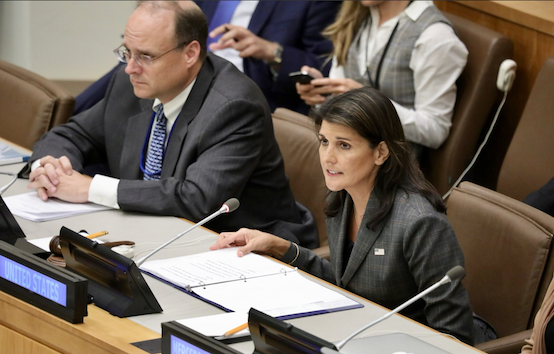 September 2018 was the turn of the United States to hold the Presidency, and this was presided over by US Ambassador Nikki Haley.(image right)
On September 5, Ambassador Haley
called a meeting on Nicaragua, and this meeting was fiercely opposed by
numerous members of the Security Council, who stated that Nicaragua is
not a threat to international peace and security, which is the mandate
of the Security Council, and objected that the US was using the meeting
in an attempt to manipulate the Security Council to gain authorization
for intervention in the internal affairs of Nicaragua, as the US had
done with Libya.
Within the historical context of US
interventions in Nicaragua, this was a major concern and fear expressed
by several delegations, quoted below, and I am providing the historic
judgements of the World Court and the International Court of Justice,
pronounced decades ago, which ruled that the United States was in
violation of international law in their prior illegal interventions in
the internal affairs of Nicaragua.
Reminiscent of the crocodile tears shed by Libyan diplomats in the
Security Council in 2011, tearfully pleading with the Security Council
to intervene in the internal affairs of Libya, a sovereign member of the
United Nations, a military intervention which led to the complete
destruction of the Libyan state, and the extrajudicial murder of Gaddafi
; and consistent with the United States’ chronic practice of
manipulating the UN Security Council to compel support for its
geopolitical agenda, the US Ambassador on September 5 trotted out Mr. Gonzalo Koncke of the OAS, and Mr. Felix Maradiaga,
Nicaraguan civil society “leader” to shed crocodile tears pleading with
the Security Council for intervention in the internal affairs of
Nicaragua, in an almost identical performance to that of the Libyan
diplomats in 2011, which led to universally recognized disaster,
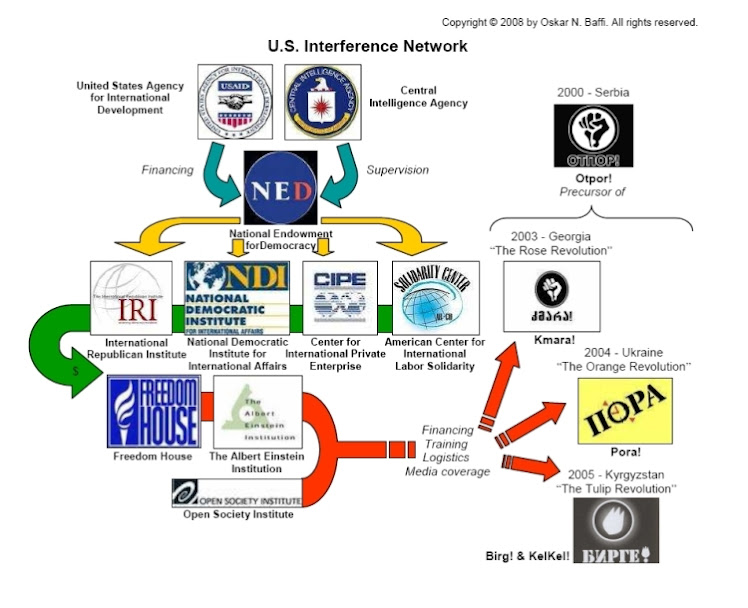
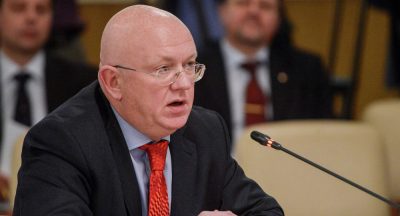
including the subsequent murder of US Ambassador Christopher Stevens, and torching of the US Embassy in Tripoli.“We have major concerns about the invited briefers. ..Does the Council’s mandate really include putting pressure on the authorities of a sovereign State to force it to make changes, whatever they may be, and thereby conniving with anti-Government forces? After today’s discussion, the polarization in Nicaragua can only worsen. It is difficult not to believe that that is what the ringleaders of today’s meeting had in mind…I want to say it once again. It is obvious to us that the issue of Nicaragua has no place on the Security Council’s agenda. The Council is responsible for the maintenance of international peace and security, and the domestic political situation in Nicaragua does not pose those kinds of threats. Rather, it is a vivid, sad example of destructive outside interference….and since the American presidency of the Council has used a regional rationale in order to shovel the Nicaraguan issue onto the Security Council’s agenda, we should not fail to mention some examples of Washington’s interference in the internal affairs of other Latin American states as well….The peoples of Africa, Asia, the Middle East and the Pacific also have some things to say about this issue. Against the backdrop of this dictatorial policy, which you do not even bother to disguise, Madam President, your accusations about third countries’ mythical interference in American domestic political life with the supposed goal of undermining America’s great democracy look particularly clumsy.”Seared into the historic memory of the Latin American peoples is the tragic and terrifying pattern of the United States, throughout the 1950’s to the 1990’s, methodically and scientifically destabilizing the economies of Guatemala, Brazil, Chile, El Salvador, etc., etc., (countries who had democratically elected Presidents committed to using their countries’ resources for the benefit of their own people,) and ultimately fomenting military coups which installed US backed dictatorships which institutionalized torture, terror and every conceivable form of human rights abuses. These bitter and horrifying memories of what, collectively, amounts to the genocide of every progressive element in the populations of the Latin American countries are ineradicable memories which cannot be consigned to historic archives, but are virulent to this very day.
Bolivia’s Ambassador Mr. Llorentty Soliz stated, with his classic eloquence:
Truth and fact are incontestable in this context, and the hypocrisy and double standards denounced by Ambassador Nebenzia and Ambassador Llorenty Soliz and by Mr. Suarez Moreno of the Bolivarian Republic of Venezuela (among others) are themes repeatedly highlighted throughout the 72 United General Assembly which followed this Security Council meeting on Nicaragua.“Interventionism, interference and the financing of opposition groups constitute the big elephant in the room that is not discussed in this Chamber. The real interest of the United States is not the defence of democracy; were it so it would not employ double standards or give speeches about defending democracy while at the same time financing coups d’etat and destabilizing democratically elected Governments. The real interest is not in defending human rights; otherwise States claiming to do so would sign all the international agreements under our system on defending and promoting human rights. If human rights were the real reason, the United States would not have abandoned the Human Rights Council, one of the greatest achievements of our system. If it were really about human rights, torture would not be promoted and asylum seekers would not be put in jail, giving rise to the inhumane separation of parents from their children. The recent history of interventionism is a long one. We need only consider what happened in regions such as the Middle East. As we have said on many occasions, in Libya, Syria and in Iraq these policies have created the worst situations in this century. What is the true interest? The true interest is to promote situations of instability and to exploit them to change regimes and to control natural resources. That is the key objective.”
*
Note to readers: please click the share
buttons above. Forward this article to your email lists. Crosspost on
your blog site, internet forums. etc.
Carla Stea is Global Research’s correspondent at the United Nations Headquarters, New York, N.Y.